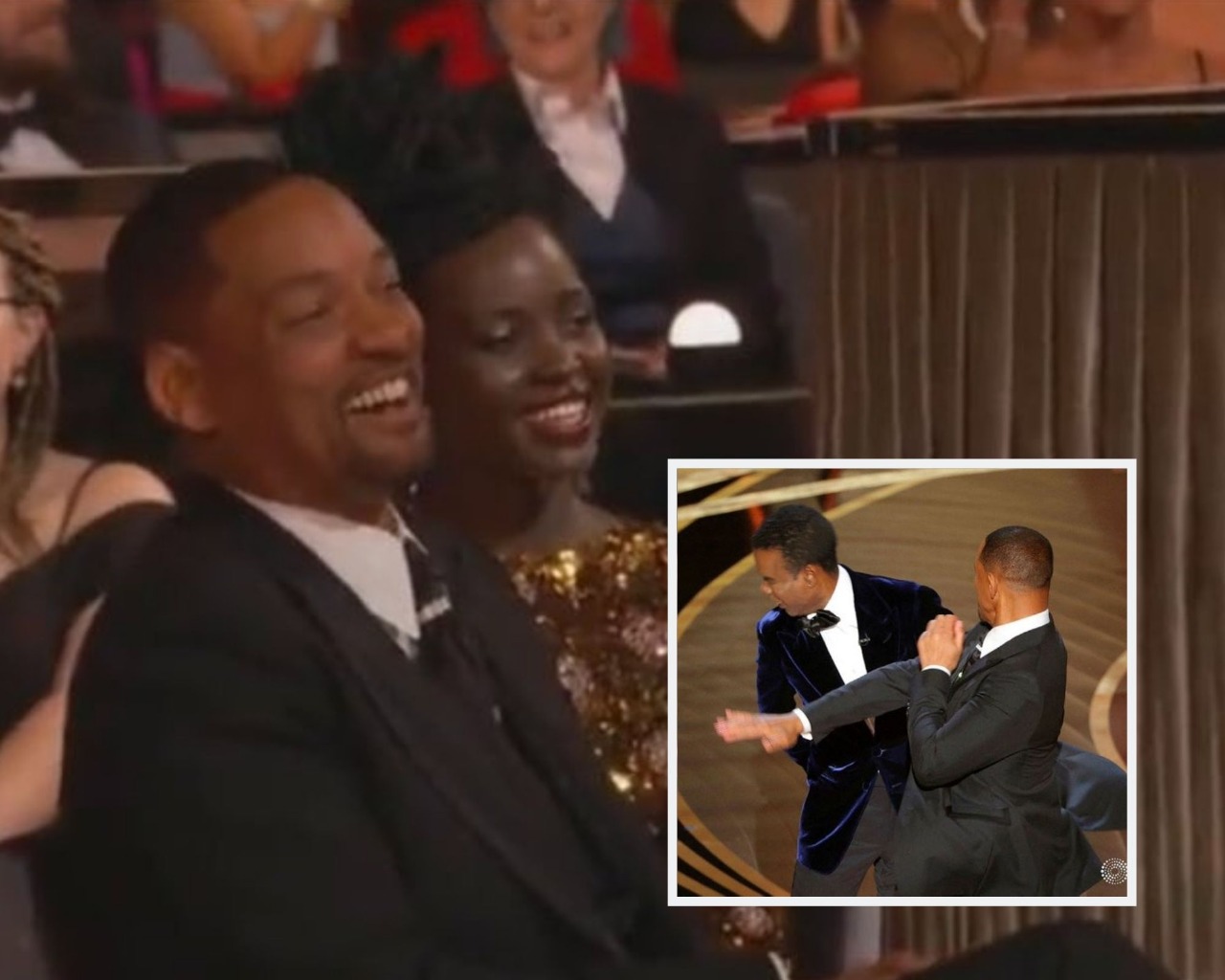
El actor Will Smith se acercó sorpresivamente a Chris Rock y le dijo una cachetada, y le gritó que no mencionara a su esposa, Jada Pinket Smith. Foto: Reuters/ abc
El actor Will Smith se acercó sorpresivamente a Chris Rock y le dio una cachetada, y le gritó que no mencionara a su esposa, Jada Pinket Smith.
Noticias Internacionales.
Las bromas pesadas de Hollywood en medio de las galas tuvieron este domingo un punto de inflexión y el momento quizás más incomodo de la historia de la entrega de los Óscar, cuando Will Smith nominado a mejor actor (y ganó), se levantó de su silla y le dio una cachetada al también actor Chris Rock, porque hizo una broma sobre su esposa.
Rock, mencionó la cabeza rapada de Jada Pinket Smith, y eso, hizo que su esposo entrara en colera.
Aunque Will Smith sonreía, su esposa la también actriz Jada, se mostraba incomoda.
Smith, que al principio se reía de algunos comentarios de su colega, se levantó sorpresivamente de su silla, subió al escenario y se acercó: le dio una cachetada.
Chris Rock no respondió al golpe.
El actor que presentaba uno de los premios, reconoció que era un momento incómodo.
Nadie se río, ese golpe congeló la sala del teatro en Los Ángeles donde se reunió este domingo lo mejor del cine de Hollywood e independiente.
Smith al recibir el premio como Mejor Actor por su papel en ‘King Richard’ (la historia sobre las hermanas Williams.
«En este negocio, siempre hay personas que te faltan al respeto, debes sonreír y hacer como que todo está bien. Pero siempre protegeré a mi familia, a mi esposa», dijo Will Smith al recibir el premio.
No ofreció una disculpa a Rock.
“Thank you. I hope the academy invites me back», le dijo a la Academia.
Para muchos, Rock hizo una broma «inapropiada», en una gala en la que para muchos, se han dicho cosas peores a los actores y las bromas han sido mucho más duras.
Sin embargo, otros defienden que Jada sufre de alopecia y ha tenido que lidiar con la perdida de su cabello por meses hasta que finalmente decidió mostrarse al mundo con su cabeza rapada.
Para otros, es un acto de violencia que muestra que la intolerancia, la falta de tacto y la salud mental, afectan a todos por igual.
Durante la pausa publicitaria, Denzel Washington y Tyler Perry, apartaron a Will Smith aparentemente para calmarlo. Will parece secarse lágrimas de los ojos mientras regresa a su asiento con Jada y su representante #Oscarspic.twitter.com/5REey90QOp
El actor Will Smith se acercó sorpresivamente a Chris Rock y le dijo una cachetada, y le gritó que no mencionara a su esposa, Jada Pinket Smith. Foto: Reuters/ abc
El actor Will Smith se acercó sorpresivamente a Chris Rock y le dijo una cachetada, y le gritó que no mencionara a su esposa, Jada Pinket Smith.
Noticias Internacionales.
Las bromas pesadas de Hollywood en medio de las galas tuvieron este domingo un punto de inflexión y el momento quizás más incomodo de la historia de la entrega de los Óscar, cuando Will Smith nominado a mejor actor (y ganó), se levantó de su silla y le dio una cachetada al también actor Chris Rock, porque hizo una broma sobre su esposa.
Rock, mencionó la cabeza rapada de Jada Pinket Smith, y eso, hizo que su esposo entrara en colera.
Aunque Will Smith sonreía, su esposa la también actriz Jada, se mostraba incomoda.
Smith, que al principio se reía de algunos comentarios de su colega, se levantó sorpresivamente de su silla, subió al escenario y se acercó: le dio una cachetada.
Chris Rock no respondió al golpe.
El actor que presentaba uno de los premios, reconoció que era un momento incómodo.
Nadie se río, ese golpe congeló la sala del teatro en Los Ángeles donde se reunió este domingo lo mejor del cine de Hollywood e independiente.
Smith al recibir el premio como Mejor Actor por su papel en ‘King Richard’ (la historia sobre las hermanas Williams.
«En este negocio, siempre hay personas que te faltan al respeto, debes sonreír y hacer como que todo está bien. Pero siempre protegeré a mi familia, a mi esposa», dijo Will Smith al recibir el premio.
Broma «de mal gusto»
Para muchos, Rock hizo una broma «inapropiada», en una gala en la que para muchos, se han dicho cosas peores a los actores y las bromas han sido mucho más duras.
Sin embargo, otros defienden que Jada sufre de alopecia y ha tenido que lidiar con la perdida de su cabello por meses hasta que finalmente decidió mostrarse al mundo con su cabeza rapada.
Para otros, es un acto de violencia que muestra que la intolerancia, la falta de tacto y la salud mental, afectan a todos por igual.
Durante la pausa publicitaria, Denzel Washington y Tyler Perry, apartaron a Will Smith aparentemente para calmarlo. Will parece secarse lágrimas de los ojos mientras regresa a su asiento con Jada y su representante #Oscarspic.twitter.com/5REey90QOp
Dermatology specialists have proposed measures to prevent alopecia from ending up in skin cancer, especially of the scalp, and have pointed out prevention, early diagnosis and advances in treatment as the main actions against this health problem
from left to right, the director of EFEsalud, Javier Tovar; and dermatologists Javier Vázquez Doval; Susana Puig Sarda; and Eduardo López Bran, moments before starting the debate “Alopecia and skin cancer”/EFE/Javier Liaño
This was stated by three prominent dermatologists in the EFEsalud Dialogues debate “Alopecia and skin cancer”, organized by the EFE Agency in collaboration with the San Carlos Clinical Hospital Health Research Institute (IdISSC).
In this informative meeting they have participated:
Dr. Susana Puig Sardá, head of the Dermatology Service at the Hospital Clínic de Barcelona; Professor of Dermatology at the Faculty of Medicine of the University of Barcelona; and world leader in the field of diagnosis and treatment of melanoma and skin cancer.
Doctor Javier Vázquez Doval, specialist in medical-surgical dermatology; coordinator of the Spanish Group of Cutaneous Oncology and Dermatological Surgery of the Spanish Academy of Dermatology; and a benchmark in the surgical treatment of skin cancer.
Dr. Eduardo López Bran, head of the Dermatology Service at the San Carlos Clinical Hospital in Madrid; and full professor of Dermatology at the Faculty of Medicine of the Complutense University of Madrid. He appears in the Forbes list of the 100 best doctors in Spain and has investigated relevant dermatological drugs in worldwide clinical trials.
Alopecia can end in scalp cancer
Experts have evaluated the importance of studies and research from American and Italian universities that show the relationship between alopecia and scalp cancer.
Research from American universities has followed 36,000 patients for more than twenty years.
Regarding this work, Dr. Puig Sardá highlighted: “We have fairly strong evidence between alopecia and the risk of skin cancer. The study from North American universities observes that people with alopecia at the age of 45, twenty years later, increased the risk of basal cell carcinoma 23% and squamous cell carcinoma 33%. And the specific risk in the scalp is seven times higher than in those who did not have alopecia.”
Dr. Eduardo López Bran, head of the Dermatology Service at the San Carlos Clinical Hospital in Madrid, in one of his interventions in the debate “Alopecia and skin cancer”/EFE/Javier Liaño
Dr. López Bran added: “It is a long-term study with a large number of patients. We suspected that there was a direct relationship between alopecia and a higher incidence of scalp tumors with a poor prognosis and difficult treatment. The study comes to confirm these suspicions.
Dr. Vázquez Doval has added to the value of these investigations that have been carried out with highly motivated people, in personnel from the United States health system.
Prevention and early and accurate diagnosis of alopecia
Prevention and early diagnosis have been two of the aspects on which dermatologists have insisted.
“Efforts must be focused on primary prevention so that patients who have lost hair do not develop skin cancer on the scalp,” proposed Dr. Vázquez Doval, who has defended measures such as wearing a hat.
Dr. Susana Puig Sardá, head of the Dermatology Service at the Hospital Clínic de Barcelona, at a moment of the debate/EFE/Javier Liaño
Dr. Puig stressed the importance of preventive measures: “The best treatment is prevention. Society must be told that lack of hair prevents natural protection, that hair protects and its loss allows ultraviolet radiation to damage our skin; simply, when the hair is lightened, you are already at risk.
López Bran has vindicated the role of the dermatologist and has underlined: “A correct diagnosis is necessary to know the cause of hair loss and establish the appropriate treatment to try to delay this loss, so that sun damage does not accumulate from an early age”.
“The incidence of scalp cancer is important. It represents a burden for the public health system and morbidity in many cases of patients”, added this dermatologist.
Dr. Vázquez Doval has stated that “small lesions on the scalp are very easily treated, better than when they grow in extension and depth. There are multiple techniques to treat it and, if the tumor has grown, a multidisciplinary treatment must be considered. In recent years there has been an arrival of new treatments that allow us to cure or almost cure skin cancer.”
Treatment of alopecia and hair transplant
“Alopecia is a disease that has a high incidence in the male and female population. At the age of 30, 30% of young people have it and it increases by 10% with each decade. It has aesthetic and also psychological importance”, has contextualized Eduardo López Bran, video blogger at EFEsalud.
Regarding hair transplants, López Bran, an expert in this technique, has highlighted the good results of these interventions, but has specified that “we must not forget that not everyone can be transplanted and that transplants have complications, you always have to do them within a comprehensive dermatological treatment”.
Dr. Javier Vázquez Doval, coordinator of the Spanish Group of Cutaneous Oncology and Dermatological Surgery of the Spanish Academy of Dermatology, presents his proposals/EFE/Javier Liaño
In this sense, Dr. Puig has remarked: “For a transplant to be successful, a global assessment of the patient is essential. It would not simplify, it is not a procedure like getting a tattoo, it is one more procedure within a therapeutic process”.
Dr. Vázquez Doval has highlighted that the diagnoses have to be made by the dermatologist “physically seeing the patient” and has warned of the existence of websites to which you send a photo and they tell you if you are a candidate for a hair transplant. “The diagnosis is not adequate if you do not see the patient”, he assured.
Conclusions
Three dermatologists, three conclusions after almost an hour of debate.
Susana Puig Sardá: “For me, the most important thing is to recognize the early signs of alopecia. If you don’t protect your scalp, you accumulate damage and pay the consequences later. Our hair is our best photoprotector. We must preserve it, and if we have lost it, solutions have to be found.”
Javier Vázquez Doval: “Skin cancer on the scalp used to be left to evolve, now it can be prevented, treated and resolved thanks to advances in medical and surgical treatments.”
Eduardo López Bran: “I want to highlight the great work of American and Italian colleagues in studies with an astonishing number of patients and almost a lifetime of research. We have diagnostic tools and training to establish the precise treatment needed by patients who are going to lose hair “.