Mostrando entradas con la etiqueta human. Mostrar todas las entradas

When three-time Olympian Gus Kenworthy took the remarkable, perhaps even brave decision to speak out against “human rights atrocities” while still in China at the Winter Games, the self-proclaimed “loud and obnoxious” British skier also proved that other athletes, had they chosen, perhaps could have used their Olympic platform to pipe up, too.

Because Kenworthy wasn’t hauled away and imprisoned, as Chinese critics of the ruling Communist Party routinely are. Doing so would have generated exactly the sort of global focus on the Chinese government’s authoritarian methods that it sought to avoid while global sports’ biggest show was in town.

And with the notable exception of Kenworthy, China largely accomplished that mission.

Olympians with any qualms about chasing medals in a country accused of genocide against its Muslim Uyghur population and of other abuses kept their views on those topics to themselves for the durations of their stay. And perhaps for good reason: They faced vague but, as it turned out, undeployed Chinese threats of punishment, constant surveillance and the sobering example of tennis star Peng Shuai’s difficulties after she voiced allegations of forced sex against a Communist Party official.

FILE – China’s Peng Shuai reacts during her first round singles match against Japan’s Nao Hibino at the Australian Open tennis championship in Melbourne, Australia on Jan. 21, 2020.

“We have seen an effective silencing of 2,800 athletes, and that’s scary,” said Noah Hoffman, a former U.S. Olympic skier and board member of the Global Athlete advocacy group pushing for Olympic reform.

FILE- Noah Hoffman, of the United States, competes during the men's 15km freestyle cross-country skiing competition at the 2018 Winter Olympics in Pyeongchang, South Korea, Friday, Feb. 16, 2018.

FILE- Noah Hoffman, of the United States, competes during the men’s 15km freestyle cross-country skiing competition at the 2018 Winter Olympics in Pyeongchang, South Korea, Friday, Feb. 16, 2018.

Kenworthy, speaking to The Associated Press before his 8th-place finish in the halfpipe final on the Games’ penultimate day, laid out why.

“We’re in China, so we play by China’s rules. And China makes their rules as they go, and they certainly have the power to kind of do whatever they want: Hold an athlete, stop an athlete from leaving, stop an athlete from competing,” he said.

“I’ve also been advised to sort of tread lightly while I am here and that’s what I am trying to do.”

Immediately after competing, however, the proudly gay athlete’s gloves came off.

He prefaced criticism with praise for China’s “incredible job with this Olympics” and carefully calibrated his words. But unlike other Olympians, he couldn’t bite his tongue until he got home. Kenworthy aimed jabs not only at the host country’s rights abuses and “poor stance on LGBTQ rights” but also at other athletes he said try “to appeal to the masses” and avoid ruffling feathers.

“I’ve already kind of accepted that that’s not what I’m gonna do,” he said. “I’m just gonna speak my truth.”

In fairness, Olympians found themselves squeezed on all sides in Beijing. Campaigners abroad hoped they would spark global outrage over the imprisonment in re-education camps of an estimated 1 million people or more, most of them Uyghurs. China, backed to the hilt by the International Olympic Committee, didn’t want critical voices to be heard. And their own voices told athletes to focus, focus, focus on the pursuit of Olympic success that they, their coaches and families sacrificed for.

The sweep and vagueness of a Chinese official’s threat before the Games of “certain punishment” for “any behavior or speech that is against the Olympic spirit” appeared to have a particularly sobering effect on Beijing-bound teams. Campaigners who met with athletes in the United States in the weeks before their departure, lobbying them about Uyghurs and the crushing of dissent in Tibet and Hong Kong, noticed the chill.

“Prior to the statement, we had been engaging with quite a few athletes,” said Pema Doma, campaigns director at Students for a Free Tibet. They “were expressing a lot of interest in learning more and being engaged in the human rights issue.”

Afterward, “there was a very, very distinct difference” and “one athlete even said to an activist directly: ‘I’ve been instructed not to take anything from you or speak to you,'” she said in a phone interview.

Other concerns also weighed on Olympians, way beyond the usual anxieties that often come with travel to a foreign land, away from home comforts.

Warnings of possible cyber-snooping by Chinese security services and team advisories that athletes leave electronic devices at home were alarming for a generation weaned on social media and constant connectivity with their worlds.

Also wearing were daily coronavirus tests that were mandatory — and invasive, taken with swabs to the back of the throat — for all Olympians, locked inside a tightly policed bubble of health restrictions to prevent infection spreads. The penalty for testing positive was possible quarantine and missed competition, a terrible blow for winter athletes who often toil outside of the limelight, except every four years at the Games.

“Who knows where those tests go, who handles the results,” Kenworthy said. “It’s definitely in the back of the mind.”

“And there’s like all the cybersecurity stuff. It is concerning,” he told The AP.

Often, athletes simply blanked when asked about human rights, saying they weren’t qualified to speak on the issue or were focused on competition, and hunkered down.

FILE- Sanne In 't Hof of the Netherlands competes in the women's speedskating 5,000-meter race at the 2022 Winter Olympics, Thursday, Feb. 10, 2022, in Beijing.

FILE- Sanne In ‘t Hof of the Netherlands competes in the women’s speedskating 5,000-meter race at the 2022 Winter Olympics, Thursday, Feb. 10, 2022, in Beijing.

On Twitter, Dutch speedskater Sanne in ‘t Hof blocked, unblocked and then blocked again a Uyghur living in the Netherlands who posted critical comments of Olympians in what he called “genocide” Games. Mirehmet Ablet shared a screengrab with The AP showing that the skater had barred him from accessing her account, where she tweeted that she “enjoyed every second!’ of her first Olympics. Ablet’s brother was arrested in 2017 in the Uyghur homeland of Xinjiang in far western China, and Ablet doesn’t know where he’s now held.

Other athletes also were effusive in praising their China experience. “Nothing short of amazing,” said U.S. speedskating bronze-medal winner Brittany Bowe.

FILE- Brittany Bowe of the United States reacts after her heat in the women's speedskating 1,500-meter race at the 2022 Winter Olympics, Monday, Feb. 7, 2022, in Beijing.

FILE- Brittany Bowe of the United States reacts after her heat in the women’s speedskating 1,500-meter race at the 2022 Winter Olympics, Monday, Feb. 7, 2022, in Beijing.

Hoffman, who competed for the U.S. at the 2014 and 2018 Games, said internal politics within teams may also have dissuaded athletes from speaking critically. Coaches can bench athletes who bring unwanted attention and “there’s pressure from your teammates to not cause a distraction,” he said in a phone interview. Athletes with self-confidence dented by sub-par performances may also have felt that they’d lost any platform.

“There’s lots of really subtle pressure,” Hoffman said.

He expects some athletes won’t be critical once home, so as to not disrespect the cheerful and helpful Games workers.

But he’s hopeful others will speak up on their return and that “we do get a chorus.”

Feeling unmuzzled, some already are.

FILE- Nils van der Poel of Sweden reacts after breaking his own world record in the men's speedskating 10,000-meter race at the 2022 Winter Olympics, Friday, Feb. 11, 2022, in Beijing.

FILE- Nils van der Poel of Sweden reacts after breaking his own world record in the men’s speedskating 10,000-meter race at the 2022 Winter Olympics, Friday, Feb. 11, 2022, in Beijing.

Back in Sweden with his two gold medals in speedskating, Nils van der Poel told the Aftonbladet newspaper that although he had “a very nice experience behind the scenes,” hosting the Games in China was “terrible.” He drew parallels with the 1936 Summer Olympics in Nazi Germany and Russia hosting the Sochi Olympics before seizing control of the Crimean peninsula in 2014.

“It is extremely irresponsible,” van der Poel said, “to give it to a country that violates human rights as clearly as the Chinese regime does.”

U.N. Secretary-General Antonio Guterres said Friday he is “determined” that his human rights chief should conduct a “credible” visit to China’s semi-autonomous Xinjiang province, where ethnic Uyghur and Turkic Muslim minorities live.

“It is in the interest of China — if they are convinced that they are not doing what people accuse them to do — it is in the interest of China to have a credible visit of the high commissioner, and we will be doing everything we can to make sure that it happens,” Guterres said. “If it won’t happen, of course the high commissioner will take the decisions that correspond to her mandate.”

The U.N. chief made the remarks in Germany at the Munich Security Conference, in response to a question from the conference chairman, Ambassador Wolfgang Ischinger.

U.N. High Commissioner for Human Rights Michelle Bachelet has been trying to negotiate a visit to Xinjiang for the past three years. Chinese officials said recently that she would be allowed to come to have an exchange, but not an investigation. Beijing denies it violates the rights of Uyghurs and says it is combating terrorism.

Rights groups and the U.S. government accuse Beijing of serious abuses of Uyghur rights, including torture, forced sterilization, sexual violence and forced separation of children. They are subjected to widespread surveillance and more than a million Uyghurs have been sent to detention camps.

China has dismissed the accusations as groundless and says Xinjiang enjoys stability, development and prosperity. Beijing has also lashed out at other nations for interfering in its internal affairs.

Guterres visited Beijing earlier this month as a guest of the International Olympic Committee for the opening ceremony of the Winter Games. He also had a meeting with Chinese President Xi Jinping and Foreign Minister Wang Yi, during which his spokesman said he told them he expects the government to allow a “credible visit” for Bachelet.

“What I have been telling the Chinese authorities, and I’m telling publicly, is that in Xinjiang human rights must be fully respected, but not only human rights must be fully respected, policies must guarantee that the identity – the cultural and religious identity of minorities is respected — and at the same time they have opportunities to be part of the society as a whole,” the secretary-general said in Munich.

Human Rights Watch welcomed the U.N. chief’s remarks.

“These are Guterres’ strongest remarks on the human rights crisis in Xinjiang to date,” Human Rights Watch U.N. Director Louis Charbonneau told VOA. “Obviously a “credible” visit by the high commissioner has to mean unfettered and unmanaged access in Xinjiang, which the secretary-general clearly recognizes.”

Charbonneau noted that the Chinese government has not yet been willing to grant that.

“The Chinese have said they’ve maintained a clear and consistent position, and there are no signs of change of heart in Beijing,” he said. “But whether or not the high commissioner visits China, she should publish her long-delayed report on Xinjiang immediately. There’s no reason to keep denying member states her office’s assessment of the massive and widespread human rights abuses in Xinjiang, which we at Human Rights Watch have determined amount to crimes against humanity.”

A report on the situation of the Uyghurs and other ethnic minorities has been expected from Bachelet’s office for some time, but so far it has not come out.

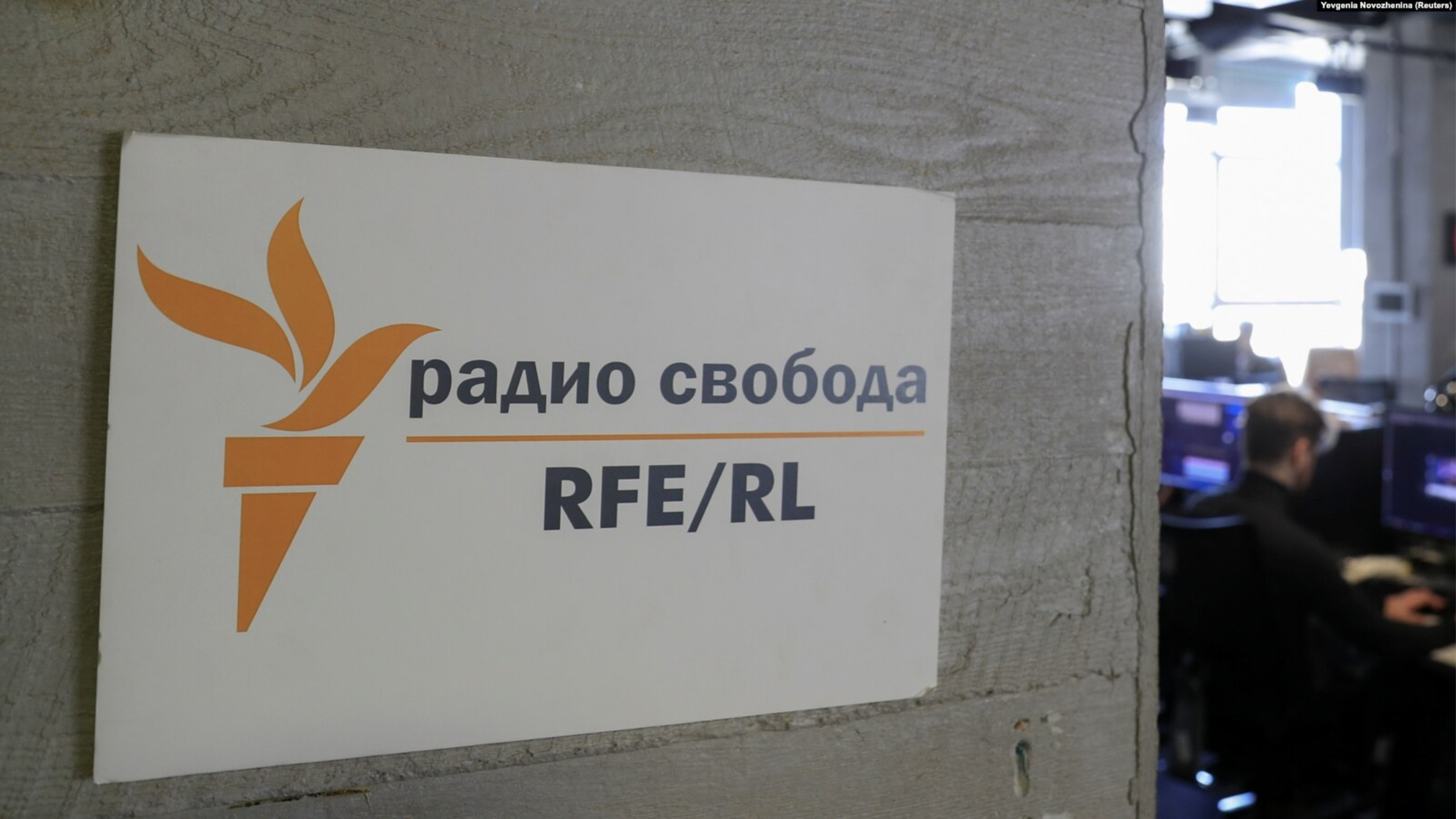
RFE/RL seeks hearing from European Court of Human Rights in its priority case against Russia

February 17, 2022

RFE/RL seeks hearing from European Court of Human Rights in its priority case against Russia

Radio Free Europe/Radio Liberty’s Moscow Bureau (RFE/RL) and its general director, Andrey Shary, filed their final written submission with the European Court of Human Rights (ECtHR) on February 9, asking the Court for a hearing to consider the merits. The brief was submitted in response to the Russian government’s “Written Observations” on RFE/RL’s legal case challenging Russia’s “foreign agent” laws, which have resulted in fines worth millions of dollars being imposed on the bureau and Mr. Shary since January 2021.

In their brief, RFE/RL has maintained its argument that Russia’s “foreign agent” content-labeling law and associated fines violate the right to freedom of expression under Article 10 of the European Convention on Human Rights, which Russia is legally bound to uphold. RFE/RL also updated the Court on the worsening climate for its journalists in Russia, as evidenced by the addition of numerous reporters to the registry of “foreign agents,” the issuance of more than 70 demands from Russia’s media regulator that RFE/RL delete from its websites articles about investigations by Alexey Navalny’s organization, and a legally groundless judgment against RFE/RL for accurately reporting on Marshal Georgy Zhukov’s recommendation during World War II that surrendering soldiers and their families be threatened with execution.

RFE/RL President Jamie Fly said, “The Kremlin, in its effort to exert complete information control over the Russian public, is attempting to criminalize journalism and smear individual Russian journalists as traitors. We urge the European Court of Human Rights to consider and rule on the legality of the ‘foreign agent’ laws which are threatening the fundamental human rights of our journalists and every single Russian citizen.”

On June 17, 2021, the ECHR granted the RFE/RL case “priority” status – which it reserves for the most important, serious, and urgent cases – within a month of its submission, and formally communicated its acceptance to the government of Russia. Russia filed its “Written Observations” in response to the case this past November.

Since January 2021, Russian regulators have issued more than one thousand administrative cases against RFE/RL and Mr. Shary in the Russian courts, carrying fines that may total $13.4 million (RUB 1 billion). Russian court bailiffs visited RFE/RL’s Moscow bureau twice to notify the organization about enforcement proceedings for the fines arising from RFE/RL’s refusal to label its content. RFE/RL’s Russian bank accounts were frozen by court order in May 2021. RFE/RL has appealed hundreds of cases, but not a single court has upheld RFE/RL’s legal challenges or decreased the levels of fines imposed by Roskomnadzor.

Since 2017, when Russia expanded its controversial “foreign agent” laws to include media outlets, nine of RFE/RL’s news outlets have been designated “foreign agents” by the Russian Ministry of Justice, as have eighteen freelance journalists associated with RFE/RL. The law on “foreign agents” has been condemned by EU High Commissioner Josep Borrell, the European Parliament, the U.S. Department of State, and other international bodies as an infringement of fundamental freedoms.

RFE/RL is represented in the European Court of Human Rights by English barristers Can Yeginsu and Ian McDonald, instructed by the international law firm, Covington & Burling LLP.

As much as China and the International Olympic Committee have pushed for the Olympic Games to be a neutral event, political controversy and boycotts of the 2022 Beijing Winter Olympics started months before Friday’s opening ceremonies.

But not everyone’s enmeshed in politics.

Boycott supporters, including human rights groups, are calling out Beijing over perceived strong-arm tactics toward Taiwan, anti-Beijing protesters in the Chinese territory of Hong Kong and the largely Muslim Uyghur population in the Chinese Xinjiang region.

Yet analysts say many developing countries value their economic ties with China, political divides notwithstanding, so they sent officials as well as athletes to stay on Beijing’s good side.

Australia has avoided sending government officials to the Feb. 4-20 Games over its belief that China is abusing human rights and refusing to hold talks on trade and diplomatic disputes. Prime Minister Scott Morrison announced that decision in early December, becoming one of the dozen-plus countries that announced diplomatic boycotts.

Most other countries with diplomatic boycotts are like Australia – with a record of concerns about human rights in China and enough wealth to get past any economic reprisals. The United States announced its diplomatic boycott in December. Canada, New Zealand, Japan, Taiwan and some 10 European countries have followed. Although government officials will not be attending, these nations still let their athletes compete in the Winter Games.

“In Europe, I think it’s very important and here in the United States and in Australia, there are populations that really do care about human rights,” said Scott Harold, a Washington-based senior political scientist with the Rand Corporation research group. “This is not just a stick to beat China or an attempt to contain China’s rise. It’s really in part about living the values that you say guide your polity.”

Six Summer or Winter Olympiads over the event’s more than 100-year history have weathered boycotts.

Officials in Beijing see diplomatic boycotts as an inappropriate mix of sports and politics. They vowed reprisal against the United States in December.

The U.S. diplomatic boycott of its Games “seriously violated the principle of the political neutrality of sports established by the Olympic Charter and that the U.S. will pay a price for it,” state-run China Daily reported.

China has denied accusations of human rights abuses and described the reasons for some U.S. lawmakers’ call for a diplomatic boycott as “full of lies and false information” that is “based on ideology and political prejudice” according to Chinese state media outlet Xinhua News Agency.

The Chinese Embassy in Washington did not respond to a request for comment on this story.

Economic, regional ties

Chinese economic clout stops some governments from boycotting, said James Gomez, regional director of the Asia Centre, a Bangkok-based think tank. Countries throughout the developing world, especially in Asia and Africa, look to China’s $15.6 trillion economy as an irreplaceable market for exports and a source of direct investment.

“China is there, it’s big, so let’s just play nice even if they may not mean it because in the play of diplomacy everybody does the doublespeak,” Gomez said. “So, even if they may be aligned politically in a different way, they will still not publicly distance themselves from China.”

The Philippines, which has its own list of problems with China, decided to send three officials to the Games with its single athlete, alpine skier Asa Miller.

Filipinos had “hardly any public discussion about participating or not” in the Games this month, said Herman Kraft, a political science professor at the University of the Philippines Diliman. Beijing and Manila have sparred with occasional ship standoffs since 2012 for control over the resource-rich South China Sea between them.

“There might be some concern about reprisals, but I think it’s more of a preemptive thing in the sense that they’re not too interested in using the Olympics as a forum or an arena where relations with China might actually be made at risk,” Kraft said.

Other Southeast Asian countries, including Malaysia and Vietnam, also vie with China over maritime sovereignty, but Malaysia has praised China for hosting the Olympics. Vietnamese President Nguyen Xuan Phuc sent a letter to Chinese officials wishing them a successful Winter Olympics, according to Vietnamese state media, Nhân Dân.

A “fear of further sanctions” may explain South Korea’s unwillingness to boycott the Games, the Washington-based Center for Strategic and International Studies said in a Jan. 13 study. China sanctioned South Korea after its deployment of the Terminal High-Altitude Area Defense anti-missile system in 2016, the study says, costing tourism alone $15.7 billion.

Beijing kicked off the Olympics on Friday with Chinese President Xi Jinping and International Olympic Committee President Thomas Bach appearing at an opening ceremony in the National Stadium.

The Argentine Lucas Boyé, scorer of a goal and assistant in Elche’s draw during his visit to a Real Madrid team that had his savior ‘in extremis’ in the Brazilian Éder Militao, on a day with ‘race’ comebacks in LaLiga, a Southampton that in the Premier stopped Manchester City’s streak of twelve consecutive league wins, a Bundesliga where the news was that Robert Lewandowski did not score in Bayern Munich’s win, a Series A that sees Inter even more leader after Milan self-canceled and Juventus Turin, and the debut as a scorer in Paris Saint Germain of the Spanish defender Sergio Ramos, stand out in the European weekend.

SOUTHAMPTON STOPS CITY, LIVERPOOL TAKES ADVANTAGE OF IT


La creciente represión de toda voz disidente por parte de los regímenes de países como China, Rusia, Nicaragua, El Salvador o Bielorrusia; el giro autoritario en democracias “antes consolidadas” como Brasil, Hungría y Turquía, y las transferencias de poder “no democráticas” en países como Túnez, marcaron 2021, según el informe anual que Human Rigths Watch (HRW) difundió este jueves en la ciudad suiza de Ginebra. Sin embargo, este panorama esconde un “futuro más sombrío” para los autócratas de lo que parece, pues el anhelo popular de democracia sigue siendo “fuerte”, precisa en el prólogo del documento Kennet Roth, director ejecutivo de la organización de derechos humanos.

En el texto, de 764 páginas, se destaca esta “realidad compleja” y la esperanza que alumbra la resistencia de muchos pueblos a la violación de sus derechos humanos, políticos y sociales. El informe recalca cómo los ciudadanos de países como Cuba, Myanmar y Sudán se echaron a la calle el pasado año para protestar contra las autocracias y los golpes de Estado. “En un país tras otro, un gran número de personas ha salido recientemente a la calle, aun a riesgo de ser detenidas o fusiladas”, destaca Roth.

Si HRW alaba en su documento la respuesta de estos pueblos, la actuación de los líderes occidentales le parece mucho más censurable. El informe critica la respuesta de Occidente ante la represión de las dictaduras, que define como “débil”, y lamenta que los países que lideran el concierto mundial no hayan sido capaces de “hacer frente” tampoco a otros desafíos, entre los que cita desde la crisis climática, la pandemia de covid-19 y la falta de acceso a las vacunas de los países menos desarrollados, hasta la pobreza, la desigualdad y la injusticia racial.

A España, HRW le reprocha las devoluciones en caliente de migrantes y solicitantes de asilo, incluido de menores de edad a través de sus fronteras -en concreto, cita el caso de Ceuta-, las muertes de migrantes fundamentalmente en la ruta de las Canarias, la pobreza aumentada por la covid-19, así como la dificultad de ejercer derechos recogidos por la legislación española como el del aborto.

Entre las críticas a países y líderes occidentales del documento, destaca especialmente el juicio negativo al desempeño del presidente de Estados Unidos. La organización recalca que, pese a que Joe Biden asumió el cargo en enero de 2021 con la promesa de situar los derechos humanos en el centro de su política exterior, EE UU “ha seguido vendiendo armas a Egipto, Arabia Saudí, los Emiratos Árabes Unidos e Israel a pesar de su persistente represión”, apuntó Roth, que reprueba también la actuación de dirigentes como el presidente francés Emmanuel Macron y la excanciller alemana Angela Merkel, que “han mostrado una debilidad similar en su defensa de la democracia”.

El informe prosigue relatando cómo en el segundo año de pandemia muchas dictaduras o autocracias siguieron utilizando la situación sanitaria “como pretexto” para amenazar, silenciar o detener a disidentes. Países como Egipto, India, Hungría, México, Nicaragua o Venezuela fueron ejemplos de esta práctica, de acuerdo con HRW, mientras que, en casos como los de Rusia o Cuba, se empleó la excusa de la covid-19 para “acabar con protestas contra el gobierno mientras se permitían otras a su favor”.

Únete a EL PAÍS para seguir toda la actualidad y leer sin límites.

Suscríbete

Uno de los ejemplos de esta instrumentalización de la pandemia es -denuncia la ONG- el del Gobierno ultranacionalista húngaro de Viktor Orbán, que mantiene vigente el estado de emergencia desde 2020. Esta medida le permite gobernar por decreto en temas sanitarios e incluso suspender la aplicación de las leyes. La Administración de Orbán mantuvo además en 2021 sus ataques contra las instituciones democráticas, la prensa y la comunidad LTGBI, deja patente el documento.

El informe de la organización, que repasa la situación de los derechos humanos en más de un centenar de países del mundo, constata a su vez el jaque de China a los últimos reductos de libertad en Hong Kong y la imposición de una draconiana Ley de Seguridad Nacional que “acabó completamente con las libertades políticas y permitió solo a “patriotas” aliados de Pekín presentar candidaturas”, subraya en el prólogo Roth. HRW lamenta asimismo el silencio de Naciones Unidas y su negativa a condenar abiertamente a China por sus “crímenes contra la humanidad” contra la minoría musulmana uigur en la región de Xinjiang.

Otro régimen que, según el documento de HRW, es responsable de violaciones de derechos humanos especialmente graves es Venezuela. La ONG acusa al Gobierno de Nicolás Maduro y sus fuerzas de seguridad  “de ejecuciones extrajudiciales, desapariciones por un corto periodo de tiempo, así como del encarcelamiento y torturas de opositores”.

HRW describe, por otra parte, el incremento de los abusos en sistemas electorales ya antes frágiles y destaca los que tuvieron lugar en Rusia, donde el líder opositor Alexei Navalni fue condenado a prisión después de sobrevivir a un intento de envenenamiento, o en Nicaragua, donde todos los candidatos rivales de Daniel Ortega fueron detenidos antes de las elecciones de noviembre.

“La defensa de los derechos humanos requiere no solo combatir la represión de las dictaduras sino también mejorar el liderazgo político en las democracias”, concluye el documento de HRW, una organización fundada en 1978 que asegura financiarse con donaciones privadas y de fundaciones y no aceptar fondos gubernamentales, “ni directa ni indirectamente”.

Sigue toda la información internacional en Facebook y Twitter, o en nuestra newsletter semanal.


Source link

top