Mostrando entradas con la etiqueta seeks. Mostrar todas las entradas

The solution to the crisis of shortage of drinking water that the capital of the department of the cupcake It seems that you already have a solution in sight.

(Also: Authorities deactivate a truck with explosives in northern Cauca)

At least that is what the technical, environmental and economic studies that were carried out to define the water sources that will provide the deficit of 2,400 liters per second of water that the city currently has.

In this sense, it was established that the Piedras, Guachaca and Buritaca rivers, in the Sierra Nevadawill be in charge of supplying the aqueduct, which will later distribute it to the samarium households.

According to the study, the river stones The existing infrastructure will be used to increase the water concession from 400 to 800 liters per second for a scheme that from October to December can capture 800 liters per second.

(Read: Merchants were waiting for Mayor Jaime Pumarejo)

The rest of the year, 400 liters per second or less will be captured, depending on the flow of this water current.

Looking for money to finance the project

Currently the project is at 66 percent, but with the approval of the final alternative, it is expected to have the works defined in the next three months.

“We will build the first stages and for the remaining phases, we will leave a precise roadmap for the next administrations,” he said.Governor Carlos Caicedo.

For her part, Mayor Virna Johnson indicated that this progress was possible through cooperation with the Government.

The works involved in building

In the explanations of the rulers, it was known that in the Guachaca River A subsurface filtering gallery-type intake 20 meters long by 18 meters wide and 3.6 meters deep will be built.

In the months of January, August and September, 2,400 liters per second will be captured through it; and from February to July between 1,600 and 2,000 liters per second.

Drinking water in Santa Marta

Design of the catchment plant for the rivers of the Sierra Nevada de Santa Marta.

Photo:

Governorate of Magdalena

At Buritaca River A catchment of 900 liters per second will be located and water will only be obtained in the months of February to July, when the flow cannot be completed with the Guachaca tributary.

(Be sure to read: The new prison that has its neighbors protesting in Barranquilla)

The Guachaca and Buritaca intakes will have water pumping stations to take it to the new El Curval plant, where a pipe with a diameter of 1.5 meters and 29 kilometers in length will be used.

In the El Curval sector, in the township of Bondathe new potabilization plant will be located, which will be of the fully automated conventional type.

The project also includes the designs of the aqueduct networks of the Nuevo Milenio, Villa Dania, Garagoa, Cantilito, Timayuí, November 11, El Yucal neighborhoods, among others, and the Bonda corregimental head, which will be completely connected to the new infrastructure. for continuous 24-hour service.

By Roger Urieles
For THE WEATHER Santa Marta
@rogeruv

Read more news from Colombia here

Alert for forest fire in the Serranía del Perijá

US nuclear submarine in Cartagena: this was the defense exercise

A La Rueda Rueda chess tournament opens registration

Research projects that address financial inclusion have an option for their development.The WWB Colombia Foundation Fund for Research FI “Contexts and opportunities for closing inequality gaps that affect women in rural areas”. will finance projects for 1,426 million pesos in Chocó, Valle del Cauca, Cauca and Nariño, in the Colombian Pacific.

“Since 2017, 50 projects have been financed for more than 3,000 million. We hope to continue contributing to the generation of quality knowledge and the reduction of inequality gaps”, said Daniela Konietzko, president of the WWB Colombia Foundation.

(It may interest you: The Valle INN fund reactivates and fulfills the dreams of entrepreneurs)

“I decided to apply for the call and I have received great support,” says Tatiana Bachiller, one of the beneficiaries of the WWB Colombia Foundation Fund for #Research as a Master’s student at the University of Cauca, who participated in the second call for the fund with her work degree “Counter-hegemonic knowledge of the #women of the global south”. That work had an honorable mention.

This semester, the call in the Field Work Support modality, aimed at master’s students (from 23 to 44 million pesos and doctorate (from 45 to 67), will be open until April 8. The groups ( from 100 to 150 million) and research hotbeds (8 million) will be able to apply from March 31.

More information on the page https://fondoparalainvestigacion.fundacionwwbcolombia.org/proyecto/ or write to the email fondoinvestigacion@fundacionwwbcol.org.

“It is the best opportunity to be able to advance our degree work. When I applied to the Fund, it was very easy and I found great support, my thesis received an honorable mention for the level of demand and commitment”, mentions Tatiana Bachiller, teacher of interdisciplinary development studies, from the University of Cauca, beneficiary.

Read more news from Colombia

In Llano Verde, a neighborhood of Cali, they seek to combat the recruitment of minors

A breast cancer suffered by his mother motivated the math and physics teacher Eder Antonio Linares Vargas to initiate studies that contribute to the understanding of this pathology that comes to life for many women in the world every day.

(Also: Education and sports, Alex Char’s promise to Magdalena)

“My mother has ductal breast cancer and they had to remove her left breast plus some lymph nodes in her left arm. she was in chemotherapy”, says the teacher from Barranquilla.

It is in this moment of adversity where he confesses that his desire to understand how a normal cell it becomes cancerous.

“That is my greatest motivation to start this research,” explains this professor who has spent months fighting and knocking on doors for help to start his project.

Linares has a degree in mathematics and physics from the Atlantic University. Master in Applied Physics from the University of Zulia (Venezuela).

“I was in Mexico at the University of Sonora working on the Physicochemistry of triple negative breast cancer,” he says that he has also been a professor at the Uniatlantico, the CUC, ITSA and the uninorte from Barranquilla.

(Read: Sim Card: how you can be scammed or impersonated if you lose it)

My mother has breast cancer. She was in chemotherapy. That is when my desire to understand how a normal cell becomes cancerous is born.

For his study of cancer cells has consulted scientific articles and assures that he found that “as based on the partial failure of medical oncologists, biologists, biochemists, etc., in the diagnosis and treatment of cancer in early stages, physicists and mathematicians begin to contribute to the understanding of this pathology,” he says.

“Undoubtedly, in order to improve the diagnosis of cancer in its early stages, monitor the disease and carry out adequate treatment, it is necessary to resort to new technologies such as nanomedicine. A very new and cutting-edge technological trend is based on the use of nanomaterials for theranostic purposes”, he indicates.

He won a scholarship to study in Argentina

Linares applied for a scholarship for a doctorate in Argentina with the Conicet, the counterpart of Colciencias in Colombia. It is an international scholarship, where the academic averages of the courses studied are evaluated, especially in the master’s degree. The resume of each student and the possible lines of research to be followed are also evaluated. “Thank God I managed to get the scholarship.”

(Read: The Tayrona reopened its doors with more lifeguards and services)

But its economy is not the best. “I have a contract with the Secretary of Education of Barranquilla, I asked them for financial support for paperwork and air tickets and the response was not favorable.

Professor Linares is married and has a four-month-old baby, whom he cannot leave alone to study in Argentina.

The Institute of Atomic and Nuclear Physics of Bariloche where I would carry out my initial study, has a kind of nursery for the care of the young children of researchers and doctoral students with families and there is the possibility that she will also start a professional career in that country” explains the professor who is applying help for document procedures: The Mercosur visa as a family nucleus and the one-way air tickets to Bariloche Argentina.

(Don’t stop reading: After 121 processes, today the first recall is voted)

“I hope and seek the help of some entity or person who understands the importance of a Colombian being linked to this type of investigation,” says a resident of Vivo en el Barrio New Colombia in Barranquilla. People interested in helping him can contact him at 3052814445.

LEONARDO HERRERA DELGANS
Correspondent of EL TIEMPO Barranquilla
@leoher69
Write me at leoher@eltiempo.com

Read more news from Colombia

The chocoanas who help to face the burdens of autism

Three babies waiting for the light while their mothers are behind bars

ICBF has the 11-month-old child victim of alleged abuse by his mother

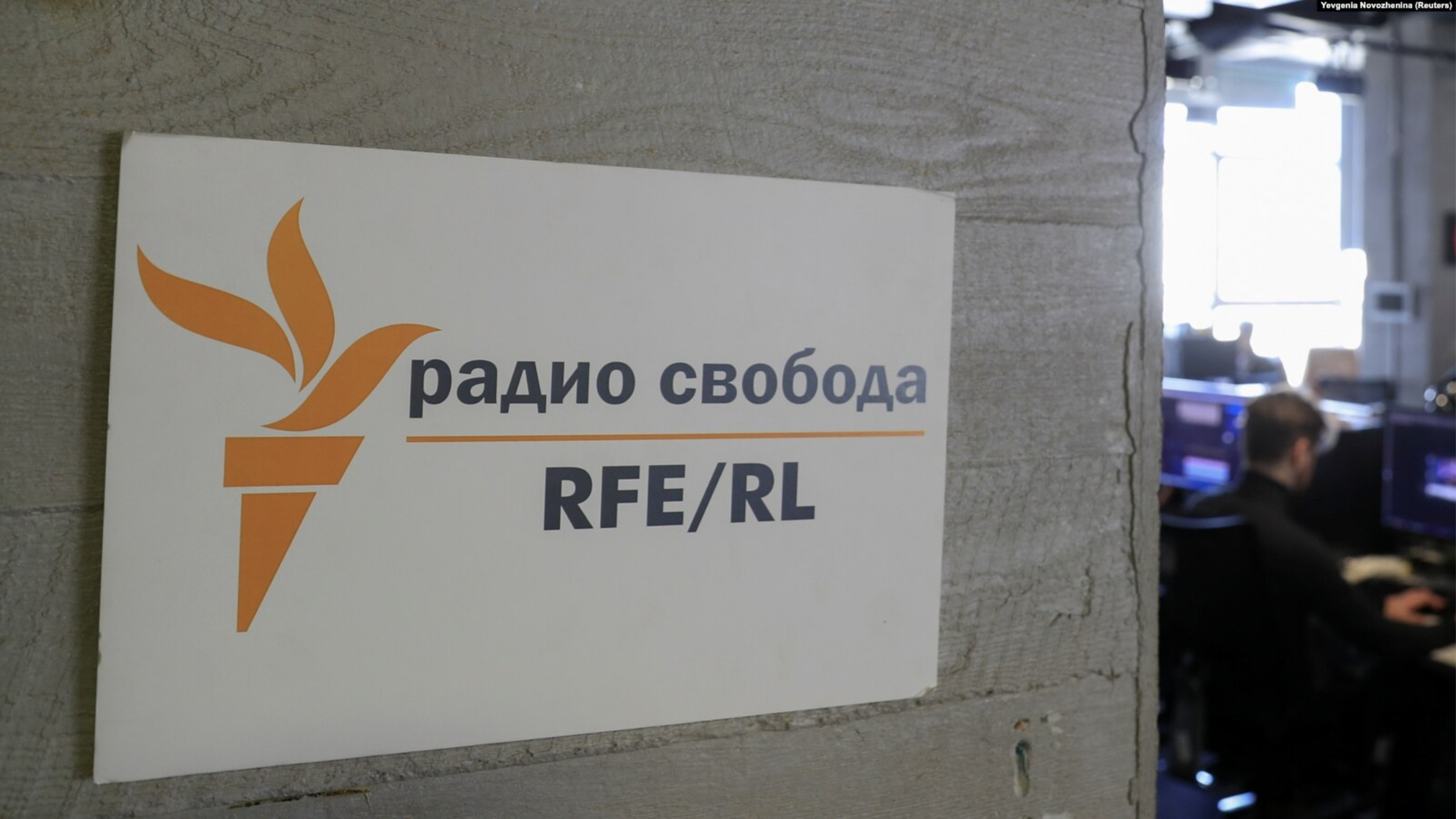
RFE/RL seeks hearing from European Court of Human Rights in its priority case against Russia

February 17, 2022

RFE/RL seeks hearing from European Court of Human Rights in its priority case against Russia

Radio Free Europe/Radio Liberty’s Moscow Bureau (RFE/RL) and its general director, Andrey Shary, filed their final written submission with the European Court of Human Rights (ECtHR) on February 9, asking the Court for a hearing to consider the merits. The brief was submitted in response to the Russian government’s “Written Observations” on RFE/RL’s legal case challenging Russia’s “foreign agent” laws, which have resulted in fines worth millions of dollars being imposed on the bureau and Mr. Shary since January 2021.

In their brief, RFE/RL has maintained its argument that Russia’s “foreign agent” content-labeling law and associated fines violate the right to freedom of expression under Article 10 of the European Convention on Human Rights, which Russia is legally bound to uphold. RFE/RL also updated the Court on the worsening climate for its journalists in Russia, as evidenced by the addition of numerous reporters to the registry of “foreign agents,” the issuance of more than 70 demands from Russia’s media regulator that RFE/RL delete from its websites articles about investigations by Alexey Navalny’s organization, and a legally groundless judgment against RFE/RL for accurately reporting on Marshal Georgy Zhukov’s recommendation during World War II that surrendering soldiers and their families be threatened with execution.

RFE/RL President Jamie Fly said, “The Kremlin, in its effort to exert complete information control over the Russian public, is attempting to criminalize journalism and smear individual Russian journalists as traitors. We urge the European Court of Human Rights to consider and rule on the legality of the ‘foreign agent’ laws which are threatening the fundamental human rights of our journalists and every single Russian citizen.”

On June 17, 2021, the ECHR granted the RFE/RL case “priority” status – which it reserves for the most important, serious, and urgent cases – within a month of its submission, and formally communicated its acceptance to the government of Russia. Russia filed its “Written Observations” in response to the case this past November.

Since January 2021, Russian regulators have issued more than one thousand administrative cases against RFE/RL and Mr. Shary in the Russian courts, carrying fines that may total $13.4 million (RUB 1 billion). Russian court bailiffs visited RFE/RL’s Moscow bureau twice to notify the organization about enforcement proceedings for the fines arising from RFE/RL’s refusal to label its content. RFE/RL’s Russian bank accounts were frozen by court order in May 2021. RFE/RL has appealed hundreds of cases, but not a single court has upheld RFE/RL’s legal challenges or decreased the levels of fines imposed by Roskomnadzor.

Since 2017, when Russia expanded its controversial “foreign agent” laws to include media outlets, nine of RFE/RL’s news outlets have been designated “foreign agents” by the Russian Ministry of Justice, as have eighteen freelance journalists associated with RFE/RL. The law on “foreign agents” has been condemned by EU High Commissioner Josep Borrell, the European Parliament, the U.S. Department of State, and other international bodies as an infringement of fundamental freedoms.

RFE/RL is represented in the European Court of Human Rights by English barristers Can Yeginsu and Ian McDonald, instructed by the international law firm, Covington & Burling LLP.

top