Mostrando entradas con la etiqueta RFERL. Mostrar todas las entradas

RFE/RL suspends operations in Russia following Kremlin attacks

March 6, 2022

RFE/RL suspends operations in Russia following Kremlin attacks

currRadio Free Europe/Radio Liberty (RFE/RL) has suspended its operations in Russia after local tax authorities initiated bankruptcy proceedings against RFE/RL’s Russian entity on March 4 and police intensified pressure on its journalists. These Kremlin attacks on RFE/RL’s ability to operate in Russia are the culmination of a years-long pressure campaign against RFE/RL, which has maintained a physical presence in Russia since 1991 when it established its Moscow bureau at the invitation of then-President Boris Yeltsin.

Also on March 4, Russian President Vladimir Putin signed a law that could subject any journalist who deviates from the Kremlin’s talking points on the Ukraine war to a 15-year prison sentence. Because RFE/RL journalists continue to tell the truth about Russia’s catastrophic invasion of its neighbor, the company plans to report about these developments from outside of Russia.

Said RFE/RL President & CEO Jamie Fly, “It is with the deepest regret that I announce the suspension of our physical operations in Moscow today. This is not a decision that RFE/RL has taken of its own accord, but one that has been forced upon us by the Putin regime’s assault on the truth. Following years of threats, intimidation and harassment of our journalists, the Kremlin, desperate to prevent Russian citizens from knowing the truth about its illegal war in Ukraine, is now branding honest journalists as traitors to the Russian state. We will continue to expand our reporting for Russian audiences and will use every platform possible to reach them at a time when they need our journalism more than ever. Despite this bleak moment, we know from our organization’s 70-year history that one day, perhaps sooner than many think, we will be able to reopen a bureau in Russia. Time is on the side of liberty, even in Vladimir Putin’s Russia.”

Over the last week, nine of RFE/RL’s Russian language websites were blocked after RFE/RL refused to comply with the Russian government’s demands to delete information about Russia’s invasion of Ukraine. Overnight on March 3-4, Russian authorities blocked access within Russia to websites run by RFE/RL’s RussianTatar-Bashkir, and North Caucasus services, including the Russian-language North.RealitiesSiberia.RealitiesIdel.Realities, and Caucasus.Realities sites. On February 28, Russia blocked access to two other RFE/RL websites, including Current Time, the 24/7 digital and TV network led by RFE/RL in cooperation with VOA.

Since invading Ukraine, Russia has blocked a number of Russian-language websites producing news content from abroad, including Meduza, BBC, Deutsche Welle and Voice of America. The Kremlin has also blocked access to Facebook and Twitter.

The technical cause of the bankruptcy of RFE/RL’s Russian entity is its longstanding refusal to comply with Russia’s unlawful demand that every piece of RFE/RL’s Russian-language content—every video, every article, every tweet—be accompanied by a state-mandated warning that RFE/RL is a “foreign agent.” In the past year, Russia’s media regulator Roskomnadzor has issued 1,040 violations against RFE/RL that will result in fines of more than $13.4 million for its refusal to submit to this content-labeling regime. In addition, 18 RFE/RL journalists have been designated as individual “foreign agents.” On February 9, RFE/RL filed its final written submission with the European Court of Human Rights (ECtHR), asking for a hearing to consider the merits of the legal case it filed in May 2021 challenging Russia’s “foreign agent” laws.

RFE/RL has been broadcasting to Russian audiences since March 1, 1953, when the first programs of “Radio Liberation” were directed at audiences in the Soviet Union. Between November 1988 and August 1991, as Soviet leader Mikhail Gorbachev’s “glasnost” policies took hold, the Russian Service built up a network of as many as 400 people across the U.S.S.R. and over 40 people in Moscow. On August 27, 1991, Russian Federation President Boris Yeltsin issued a decree giving RFE/RL accreditation and allowing it to open a bureau in Moscow; the decree was revoked by Russian President Vladimir Putin in 2002.

RFE/RL’s Russian Service is a multiplatform alternative to Russian state-controlled media, providing audiences in the Russian Federation with informed and accurate news, analysis, and opinion. The Russian Service’s websites, including its regional reporting units Siberia.Realities and Northern.Realities, earned a monthly average of 12.7 million visits and 20.6 million page views in 2021, while 297 million Russian Service videos were viewed on YouTube, Facebook, and Instagram.

RFE/RL’s Tatar-Bashkir Service is the only major international news provider reporting in the Tatar and Bashkir languages to audiences in the Russian Federation’s multiethnic, Muslim-majority Volga-Ural region. Since 1953, the Service, known locally as Radio Azatliq, and its Russian-language reporting unit Idel.Realities, have provided an important and innovative alternative to government-controlled media.

RFE/RL’s North Caucasus Service is one of the few independent media outlets reporting in this predominantly Muslim region of the Russian Federation. Producing content in Chechen and Russian via its Caucasus.Realities unit, the service reports the news in one of the most violent and dangerous regions in the world.

Current Time is a 24/7 Russian-language digital and TV network led by RFE/RL in cooperation with VOA. In addition to reporting uncensored news, it is the largest provider of independent, Russian-language films to its audiences. Despite rising pressure on Current Time from the Russian government, Current Time videos were viewed over 1.3 billion times on YouTubeFacebook, and Instagram/IGTV in FY2021.

About RFE/RL

Radio Free Europe / Radio Liberty is a private, independent international news organization whose programs — radio, Internet, television, and mobile — reach influential audiences in 23 countries, including Russia, Ukraine, Iran, Afghanistan, Pakistan, the republics of Central Asia and the Caucasus. It is funded by the U.S. Congress through USAGM.

RFE/RL condemns sentencing of former Belarus Service journalist Aleh Hruzdzilovich

March 4, 2022

RFE/RL condemns sentencing of former Belarus Service journalist Aleh Hruzdzilovich

RFE/RL strongly condemns the March 3 sentencing of its former Belarus Service journalist Aleh Hruzdzilovich by a Minsk court to one and a half years in a maximum-security penal colony.

Said RFE/RL President and CEO Jamie Fly, “We strongly condemn this illegitimate persecution of an innocent journalist. His only ‘crime’ was reporting the truth to Belarusians who are now denied that truth by their government. We call for Aleh’s immediate release.”

An award-winning journalist, Hruzdzilovich was arrested on December 23, 2021, and was tried on March 2 for taking part in mass protests against the 2020 presidential election. Hruzdzilovich has consistently rejected the charges, stating he was working as an RFE/RL correspondent with Foreign Ministry accreditation at an August 2020 protest, and covered two other protests in October 2020 on assignment for his employer, the local newspaper Narodnaya Volya. The 63-year old previously served a 10-day sentence in July 2021 and a 15-day sentence in November 2020 for reporting on the protests, which followed the August 2020 presidential election that controversially returned longtime incumbent Alyaksandr Lukashenka to office for a sixth term. In January, RFE/RL’s Belarus Service published some of Hruzdzilovich’s letters from prison.

Hruzdzilovich is one of three former RFE/RL journalists imprisoned in Belarus. All three have been recognized by the Belarusian Human Rights Centre “Viasna” as political prisoners.

Andrey Kuznechyk, a former web editor for the Belarus Service, was arrested on November 25, 2021, while on a bike ride near his home in Minsk, and has been in detention ever since. After serving two consecutive 10-day administrative sentences for “hooliganism,” Belarusian authorities opened a criminal case on unspecified charges against Kuznechyk on December 23, 2021. Fly has termed Kuznechyk’s situation a “state-sponsored kidnapping.”

Ihar Losik, a consultant for RFE/RL and prominent blogger, was arrested on June 25, 2020, and tried on charges including “organization and preparation of actions that grossly violate public order” and “preparation for participation in riots.” The five-month, closed-door proceeding resulted, on December 14, 2021, in Losik’s conviction and sentencing to 15 years in prison; his five co-defendants also received harsh sentences of between 14 and 18 years, on charges widely considered to have been fabricated by Belarusian authorities. Fly condemned the trial as an “outrageous travesty of justice.”

In December 2021 Belarus’s Interior Ministry added RFE/RL’s Belarus Service, Radio Svaboda, to its registry of extremist organizations in a continued clampdown on independent media and civil society. The move means that Belarusians who subscribe to Radio Svaboda online could face up to six years in prison. The Belarus Service’s website has been blocked within Belarus since August 21, 2020, while the accreditations of all locally based journalists working for foreign media, including RFE/RL, were annulled by the Belarusian authorities in October 2020.

About RFE/RL

Radio Free Europe / Radio Liberty is a private, independent international news organization whose programs — radio, Internet, television, and mobile — reach influential audiences in 23 countries, including Russia, Ukraine, Iran, Afghanistan, Pakistan, the republics of Central Asia and the Caucasus. It is funded by the U.S. Congress through USAGM.
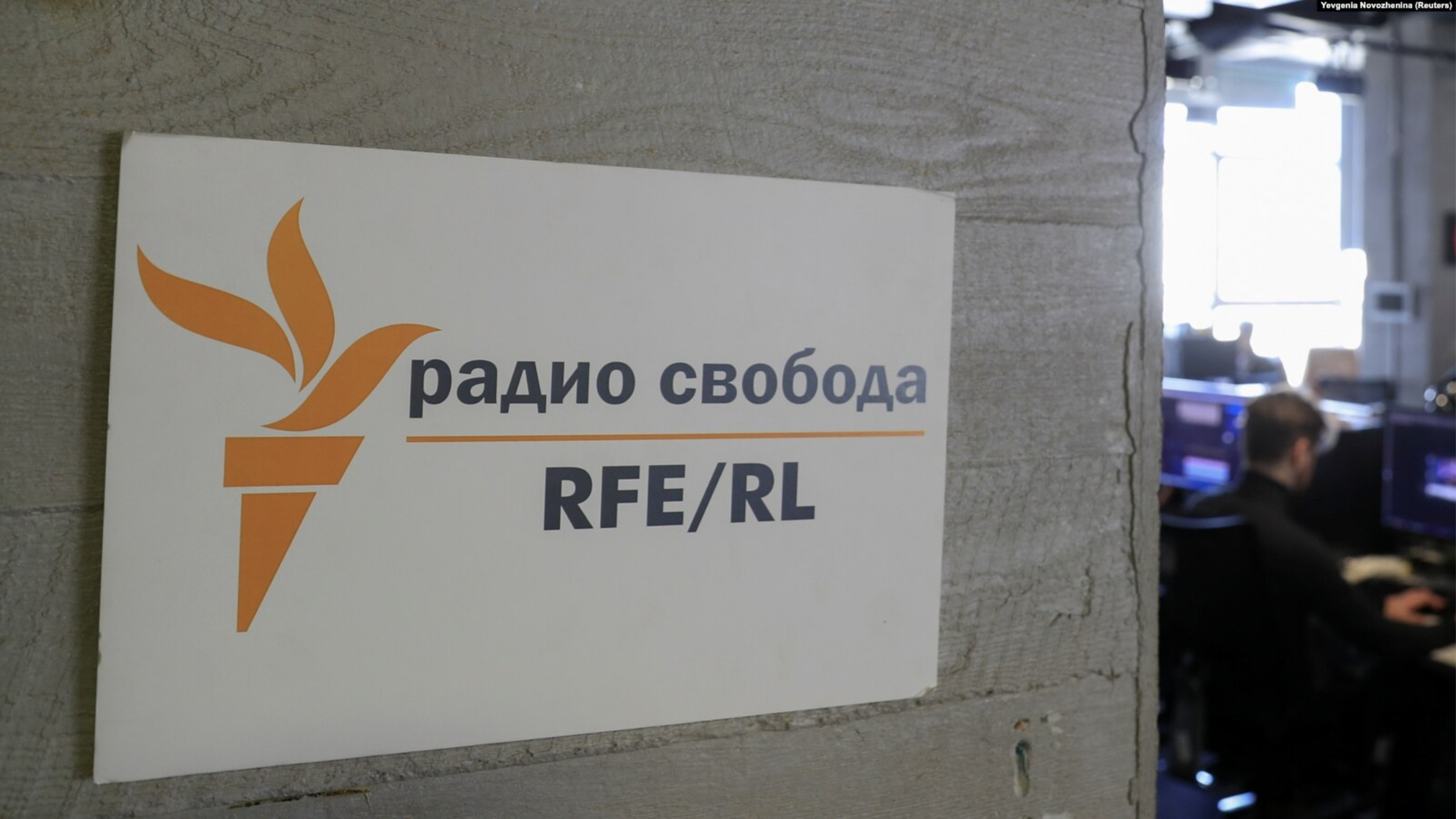
Despite Website blockages, Russians and Ukrainians turn to RFE/RL for war coverage

March 4, 2022

Despite Website blockages, Russians and Ukrainians turn to RFE/RL for war coverage

Radio Free Europe/Radio Liberty (RFE/RL) condemns the blocking of access within Russia to websites run by its RussianTatar-Bashkir, and North Caucasus services, including the Russian-language North.RealitiesSiberia.RealitiesIdel.Realities, and Caucasus.Realities sites. Access to the sites was blocked after RFE/RL refused to comply with demands to delete information about Russia’s invasion of Ukraine from Russian state media-monitoring agency Roskomnadzor.

RFE/RL President Jamie Fly said: “Putin is feeding Russians a steady diet of lies about the scope and costs of the war in Ukraine. RFE/RL refuses to censor our content at this critical moment for our Russian audiences. They deserve the truth and we will continue to provide them with factual information about their government’s actions and the consequences that they must now endure.”

A number of other Russian-language websites producing news content from outside of Russia were also blocked today, including the Latvia-based meduza.io, BBC, Deutsche Welle and Voice of America (VOA). Access was blocked on February 28 to the websites of RFE/RL’s Crimea.Realities and the Current Time digital and TV network led by RFE/RL in cooperation with VOA.

Since Russia began its invasion, Russian and Ukrainian audiences have been flocking to RFE/RL and its several Russian-language content platforms. On the first day of the invasion (February 24), 527% more Ukrainians and 275% more Russians viewed RFE/RL videos via You Tube. Across all digital platforms, Current Time has earned more than 240 million video views since the invasion, reflecting a nearly tenfold increase over the network’s average pre-war number of weekly video views. Page views by audiences in Russia to RFE/RL websites have nearly doubled in the week since the invasion to just over 2 million, while views to RFE/RL videos on YouTube grew by nearly five times to almost 15 million.

During the period February 23-March 1, audiences viewed RFE/RL videos 436.4 million times on Facebook, 305.4 million times on YouTube, and 83.2 million times on Instagram – reflecting increases of 265 percent, 406 percent, and 185 percent, respectively, over the previous week.

This surge in audience numbers is indicative of a region-wide demand for reliable and factual information, which RFE/RL provides through its network of reporters offering perspectives from Ukrainians and Russians affected by the war.

RFE/RL is also working with the U.S. Agency for Global Media (USAGM) to further expand its reach by providing its content to media outlets around the world. RFE/RL and Current Time continue to field numerous requests for their content and program distribution from news outlets in Bulgaria, Canada, Estonia, Latvia, Lithuania, Moldova, and Romania, among others.

Audiences around the world are following RFE/RL’s reporting on the physical and human toll of the war. As the Kremlin and state media have refrained from disclosing details of the casualties Russia has incurred in its invasion of Ukraine, RFE/RL spoke to mothers of Russian soldiers who were shocked to learn their sons were fighting in Ukraine, after being told they were on training exercises.

Since before the war began, RFE/RL has been preparing for the eventuality that the Kremlin would act on its threats. RFE/RL’s RussianNorth Caucasus, and Tatar-Bashkir services and Idel.RealitiesCaucasus.RealitiesCrimea.RealitiesNorth.RealitiesSiberia.Realities, and Current Time websites have been educating their audiences about how to continue to access their reporting in the event that their websites are blocked. Mirror sites – complete copies of each website located at a different online address – have been set up for all of the blocked websites, and their content can also be accessed using virtual public network (VPN) clients such as nThlink. Each of the affected websites also has a robust presence on popular social media platforms such as Telegram, YouTube, Twitter, Facebook, Instagram, TikTok and VKontakte, and offer mobile applications via Google Play and Apple’s App Store, which include a built-in VPN.

About RFE/RL

Radio Free Europe / Radio Liberty is a private, independent international news organization whose programs — radio, Internet, television, and mobile — reach influential audiences in 23 countries, including Russia, Ukraine, Iran, Afghanistan, Pakistan, the republics of Central Asia and the Caucasus. It is funded by the U.S. Congress through USAGM.


RFE/RL strongly condemns blockage of Russian-language websites and harassment of journalists

February 28, 2022

Radio Free Europe/Radio Liberty (RFE/RL) strongly condemns the blocking of its Current Time TV and Russian-language Crimea.Realities websites in Russia. Access to the sites was blocked after RFE/RL refused to comply with Russian state media-monitoring agency Roskomnadzor’s demands to delete information about Russia’s invasion of Ukraine. At the time of publication, the Ukrainian and Crimean Tatar versions of Crimea.Realities remained available in Russia.

Said RFE/RL President and CEO Jamie Fly, “The Kremlin is desperate to prevent the Russian people from learning the facts about the death and destruction the Russian invasion of Ukraine is causing. We will continue to provide the truth to the Russian people at this critical moment.”

This is not the first time Roskomnadzor has sought to intimidate RFE/RL. Most recently, in early February, it threatened to block eight RFE/RL websites serving audiences in Russia, Ukraine, and Central Asia unless they took down articles tied to corruption investigations by jailed opposition leader Aleksei Navalny’s team. RFE/RL refused to comply with these demands. Some other Russian news organizations have agreed to comply.

In anticipation that the Kremlin could act on its threats, RFE/RL has been informing its audiences about how to continue to access its reporting in the event that its websites are blocked. Russian-language reporting by Crimea.Realities can be accessed on a mirror site. A Current Time TV mirror site is also available and material can be accessed using VPN client nThlink. In addition, audiences can subscribe to Current Time’s pages on TelegramTwitterInstagramFacebook and TikTok or watch its broadcasts live on YouTube and subscribe to its channel. All materials from the Current Time site are also available on our Google Play and App Store applications, which include a built-in VPN.

In a clear sign of the value audiences place on RFER/RL’s reporting of the war, 527percent more Ukrainians and 275 percent more Russians came to its websites on the first day of the invasion (February 24) than the same day the previous week. RFE/RL Ukrainian Service websites, which include Crimea.Realities and Donbas.Realities, recorded 4.7 million page views that same day, a 313 percent increase over the previous day and a 557 percent rise over the same day one week before. Current Time TV’s live coverage of the early hours of the Russian invasion of Ukraine was viewed more than 10 million times across social platforms, including YouTube and Facebook, reflecting a 25-fold increase over the same day the previous week for Current Time’s morning show.

The blocking of RFE/RL’s websites marks another sharp escalation of intimidation tactics by Russian authorities. Since the start of the war, several journalists have been detained and harassed:

In addition, on February 16, a Russia-controlled court in occupied Crimea sentenced RFE/RL freelance correspondent Vladyslav Yesypenko to six years in prison for the alleged possession and transport of explosives, a charge he has steadfastly rejected.

In the past year, Roskomnadzor has issued 1,040 violations against RFE/RL that will result in fines of more than $13.4 million for its refusal to submit to the unjust and invasive content labeling provisions of Russia’s “foreign agent” law. In addition, 18 RFE/RL journalists have been designated as individual “foreign agents.” On February 9, RFE/RL filed its final written submission with the European Court of Human Rights (ECtHR), asking for a hearing to consider the merits of the legal case it filed in May 2021 challenging Russia’s “foreign agent” laws.

On January 26, RFE/RL’s Russian Service was fined 3 million rubles ($39,000) for the alleged “public distribution of knowingly false information about the activities of the U.S.S.R. during World War II.” In fact, the existence of the published material is backed by documents from Russian archives – and RFE/RL is being held liable for actions that are not punishable under Russian law. RFE/RL is appealing the fine, not least to help defend Russia’s shrinking space for press freedom.

About RFE/RL

Radio Free Europe / Radio Liberty is a private, independent international news organization whose programs — radio, Internet, television, and mobile — reach influential audiences in 23 countries, including Russia, Ukraine, Iran, Afghanistan, Pakistan, the republics of Central Asia and the Caucasus. It is funded by the U.S. Congress through USAGM.

Audiences turn to RFE/RL for truthful reporting about Russia’s invasion of Ukraine

February 25, 2022

As the world awoke to unprovoked war in Europe, audiences turned to Radio Free Europe/Radio Liberty (RFE/RL) for breaking news and analysis of the escalation. With journalists across the region and RFE/RL’s UkrainianBelarusRussian, and Current Time networks providing on-the-ground coverage, RFE/RL is uniquely positioned to provide the facts to audiences across the region that are being bombarded by Kremlin disinformation.

  • RFE/RL’s networks recorded 13 million page views on their websites on February 24, representing a 159 percent increase over the previous day and a 248 percent increase over the same day one week before (February 17).
  • RFE/RL Ukrainian Service websites, which include content for audiences in Crimea and Donbas, alone recorded 4.7 million page views yesterday, a 313 percent increase over the previous day and 557 percent rise over the same day one week before.
  • Current Time’s live coverage of the early hours of the invasion was viewed more than 10 million times across social platforms, including YouTube and Facebook, reflecting a 25-fold increase over the same day the previous week for Current Time’s morning show.

Jamie Fly, President of RFE/RL, spoke of the importance of providing uncensored news and information and condemned Russia’s aggression: “With Russia’s illegal invasion of Ukraine, our mission to share the facts with audiences that are denied that truth by their governments or that need independent information during a crisis is more important than ever.”

“Vladimir Putin initiated an unprecedented act of war against Ukrainian democracy today, but he has been assaulting the rights of the Russian people and undermining democracies for decades. We will continue to report the truth about him and the Kremlin’s lies and fabrications to our audiences in Russia, Ukraine, Belarus, and throughout the region during this critical moment.”

RFE/RL is staying close to the story, offering comprehensive, around-the-clock reporting from our journalists on all aspects affecting our audiences during this conflict. This includes coverage of events Russian authorities would rather ignore, such as the outbreak of anti-war protests across Russia, damage to civilian apartment buildings in Kharkiv as a result of Russian bombardment, and massive traffic jams caused by civilians trying to flee the attack on Ukraine’s capital, Kyiv. RFE/RL continues to counter Russian propaganda through our services’ live videos, in-depth reports and analysis, podcasts, photo galleries, maps, infographics and real-time blogging.

To stay up to date on the latest developments, follow RFE/RL’s Live Briefing: Ukraine Under Attack – updated throughout the day. Several RFE/RL services, including the UkrainianBelarusianRussian and Current Time networks, are also live blogging the invasion, and RFE/RL has also created a list of its most relevant Twitter feeds.

In response to intensified attempts by Russia’s media monitoring agency Roskomnadzor to keep Russian audiences from accessing factual reporting on the invasion, RFE/RL’s Russian ServiceTatar-Bashkir ServiceCrimea.Realities, and Current Time units are educating their audiences on a variety of means to bypass online censorship and safely access information. Such efforts to ensure access to RFE/RL content are especially relevant given Roskomnadzor’s recent attempts to force RFE/RL to take down content tied to corruption investigations by jailed opposition leader Aleksei Navalny’s team.

About RFE/RL

Radio Free Europe / Radio Liberty is a private, independent international news organization whose programs — radio, Internet, television, and mobile — reach influential audiences in 23 countries, including Russia, Ukraine, Iran, Afghanistan, Pakistan, the republics of Central Asia and the Caucasus. It is funded by the U.S. Congress through USAGM.

RFE/RL seeks hearing from European Court of Human Rights in its priority case against Russia

February 17, 2022

RFE/RL seeks hearing from European Court of Human Rights in its priority case against Russia

Radio Free Europe/Radio Liberty’s Moscow Bureau (RFE/RL) and its general director, Andrey Shary, filed their final written submission with the European Court of Human Rights (ECtHR) on February 9, asking the Court for a hearing to consider the merits. The brief was submitted in response to the Russian government’s “Written Observations” on RFE/RL’s legal case challenging Russia’s “foreign agent” laws, which have resulted in fines worth millions of dollars being imposed on the bureau and Mr. Shary since January 2021.

In their brief, RFE/RL has maintained its argument that Russia’s “foreign agent” content-labeling law and associated fines violate the right to freedom of expression under Article 10 of the European Convention on Human Rights, which Russia is legally bound to uphold. RFE/RL also updated the Court on the worsening climate for its journalists in Russia, as evidenced by the addition of numerous reporters to the registry of “foreign agents,” the issuance of more than 70 demands from Russia’s media regulator that RFE/RL delete from its websites articles about investigations by Alexey Navalny’s organization, and a legally groundless judgment against RFE/RL for accurately reporting on Marshal Georgy Zhukov’s recommendation during World War II that surrendering soldiers and their families be threatened with execution.

RFE/RL President Jamie Fly said, “The Kremlin, in its effort to exert complete information control over the Russian public, is attempting to criminalize journalism and smear individual Russian journalists as traitors. We urge the European Court of Human Rights to consider and rule on the legality of the ‘foreign agent’ laws which are threatening the fundamental human rights of our journalists and every single Russian citizen.”

On June 17, 2021, the ECHR granted the RFE/RL case “priority” status – which it reserves for the most important, serious, and urgent cases – within a month of its submission, and formally communicated its acceptance to the government of Russia. Russia filed its “Written Observations” in response to the case this past November.

Since January 2021, Russian regulators have issued more than one thousand administrative cases against RFE/RL and Mr. Shary in the Russian courts, carrying fines that may total $13.4 million (RUB 1 billion). Russian court bailiffs visited RFE/RL’s Moscow bureau twice to notify the organization about enforcement proceedings for the fines arising from RFE/RL’s refusal to label its content. RFE/RL’s Russian bank accounts were frozen by court order in May 2021. RFE/RL has appealed hundreds of cases, but not a single court has upheld RFE/RL’s legal challenges or decreased the levels of fines imposed by Roskomnadzor.

Since 2017, when Russia expanded its controversial “foreign agent” laws to include media outlets, nine of RFE/RL’s news outlets have been designated “foreign agents” by the Russian Ministry of Justice, as have eighteen freelance journalists associated with RFE/RL. The law on “foreign agents” has been condemned by EU High Commissioner Josep Borrell, the European Parliament, the U.S. Department of State, and other international bodies as an infringement of fundamental freedoms.

RFE/RL is represented in the European Court of Human Rights by English barristers Can Yeginsu and Ian McDonald, instructed by the international law firm, Covington & Burling LLP.

RFE/RL condemns six year sentence for Ukrainian Service journalist Vladyslav Yesypenko

February 16, 2022

RFE/RL condemns six year sentence for Ukrainian Service journalist Vladyslav Yesypenko

Radio Free Europe/Radio Liberty (RFE/RL) condemns today’s sentencing of RFE/RL freelance journalist Vladyslav Yesypenko to six years in prison by a Russian-controlled court in occupied Crimea.

Said RFE/RL President Jamie Fly, “This judgement against Vladyslav is a travesty. As a journalist doing nothing more than reporting the facts, he should never have been detained in the first place, much less put through the physical and mental torture that he has endured over the past eleven months. Vladyslav needs to be returned home to his wife and daughter immediately.”

Yesypenko, a dual Russian-Ukrainian citizen who contributes to Crimea.Realities, a regional news outlet of RFE/RL’s Ukrainian Service, was detained by Russia’s Federal Security Service (FSB) in Simferopol on March 10, 2021, on suspicion of collecting information for Ukrainian intelligence. Yesypenko left Crimea for mainland Ukraine with his wife, Kateryna, following the 2014 Russian annexation, where she gave birth to their daughter, Stephania; he would later return to Crimea periodically to report for RFE/RL on the social and environmental situation on the peninsula.

Following his detention, Yesypenko was brutally tortured by Russian FSB officers, to force him to make a false ‘confession’ on Russian television. Yesypenko was formally charged with possession and transport of explosives on July 15, 2021. He pleaded not guilty, facing up to 18 years in prison if convicted. The indictment made no mention of espionage or work for Ukrainian intelligence, as stated previously by the FSB.

Speaking at the Ukrainian Embassy in Washington on October 21, 2021, Yesypenko’s wife read out an appeal from her husband. In the letter dictated from his jail cell, Yesypenko called on U.S. President Joe Biden and U.S. lawmakers to do more to free the more than 100 political prisoners detained by the FSB over their activities in Crimea.

Sixteen Ukrainian human rights NGOsUkrainian Ombudswoman Lyudmyla Denisova, and the U.S. Embassy in Kyiv have denounced the verdict in online statements, as has Reporters Without Borders. In December 2021 Amnesty International launched an online petition demanding Yesypenko’s immediate release. Press-freedom advocates, including the Committee to Protect Journalists, along with Ukrainian Foreign Minister Dmytro Kuleba and the U.S. State Department, are among those who have called for the same in the absence of any evidence of wrongdoing.

About RFE/RL

Radio Free Europe / Radio Liberty is a private, independent international news organization whose programs — radio, Internet, television, and mobile — reach influential audiences in 23 countries, including Russia, Ukraine, Iran, Afghanistan, Pakistan, the republics of Central Asia and the Caucasus. It is funded by the U.S. Congress through USAGM.

RFE/RL condemns latest Kremlin threats as “political censorship”

February 5, 2022

RFE/RL condemns latest Kremlin threats as “political censorship”

Radio Free Europe/Radio Liberty (RFE/RL) strongly condemns a sharp escalation of intimidation tactics by Russian authorities, which saw state media-monitoring agency Roskomnadzor overnight threaten to block eight RFE/RL websites serving audiences in Russia, Ukraine, and Central Asia unless they pulled down articles tied to corruption investigations by jailed opposition leader Aleksei Navalny’s team.

RFE/RL will not comply with these demands. Said President and CEO Jamie Fly, “RFE/RL will not allow the Kremlin to dictate our editorial decisions. This is a blatant act of political censorship by a government apparently threatened by journalists who are merely reporting the truth.”

Roskomnadzor sent more than 60 e-mail notifications giving RFE/RL 24 hours to remove content related to Navalny investigations from its two largest websites for Russian audiences – Radio Liberty and Current Time – as well as RFE/RL’s Russian-language sites for Ukraine’s Crimean Peninsula, Kazakhstan, and Tajikistan, and local sites for Russia’s Siberian, Volga-Ural, and Northwestern regions.

More than a dozen Russian publications, including the Newspaper Novaya Gazeta, as well as Dozhd television channel and Ekho Moskvy radio station, have received similar notices in recent days. Several decided to comply with the demands and removed the content. The move is the latest in a series of attacks against RFE/RL and other independent media and comes as RFE/RL has been extensively covering the unprecedented Russian military buildup for its audiences in Russia, Ukraine, and Belarus, rebutting Kremlin disinformation and exposing malign Russian activities.

In the past year, Roskomnadzor has issued 1,040 violations against RFE/RL that will result in fines of more than $13.4 million for its refusal to submit to the unjust and invasive content labeling provisions of Russia’s “foreign agent” law. RFE/RL continues to fight these fines in Russian court and has also filed suit with the European Court of Human Rights (ECHR) over the law. In addition, 18 RFE/RL journalists have been designated as individual “foreign agents.”

On January 26, RFE/RL’s Russian Service was fined 3 million rubles ($39,000) for the alleged “public distribution of knowingly false information about the activities of the U.S.S.R. during World War II.” In fact, the existence of the published material is backed by documents from Russian archives – and RFE/RL is being held liable for actions that are not punishable under Russian law. RFE/RL is appealing the fine, not least to help defend Russia’s shrinking space for press freedom.

In a sign that the crackdown on press freedom may yet intensify, President Putin in late January issued an order calling for the creation of a new “register of toxic content.”

About RFE/RL

Radio Free Europe / Radio Liberty is a private, independent international news organization whose programs — radio, Internet, television, and mobile — reach influential audiences in 23 countries, including Russia, Ukraine, Iran, Afghanistan, Pakistan, the republics of Central Asia and the Caucasus. It is funded by the U.S. Congress through USAGM.

RFE/RL condemns latest Kremlin threats as “political censorship”

February 4, 2022

RFE/RL condemns latest Kremlin threats as “political censorship”

Radio Free Europe/Radio Liberty (RFE/RL) strongly condemns a sharp escalation of intimidation tactics by Russian authorities, which saw state media-monitoring agency Roskomnadzor overnight threaten to block eight RFE/RL websites serving audiences in Russia, Ukraine, and Central Asia unless they pulled down articles tied to corruption investigations by jailed opposition leader Aleksei Navalny’s team.

RFE/RL will not comply with these demands. Said President and CEO Jamie Fly, “RFE/RL will not allow the Kremlin to dictate our editorial decisions. This is a blatant act of political censorship by a government apparently threatened by journalists who are merely reporting the truth.”

Roskomnadzor sent more than 60 e-mail notifications giving RFE/RL 24 hours to remove content related to Navalny investigations from its two largest websites for Russian audiences – Radio Liberty and Current Time – as well as RFE/RL’s Russian-language sites for Ukraine’s Crimean Peninsula, Kazakhstan, and Tajikistan, and local sites for Russia’s Siberian, Volga-Ural, and Northwestern regions.

More than a dozen Russian publications, including the newspaper Novaya gazeta, as well as Dozhd television channel and Ekho Moskvy radio station, have received similar notices in recent days. Several decided to comply with the demands and removed the content. The move is the latest in a series of attacks against RFE/RL and other independent media and comes as RFE/RL has been extensively covering the unprecedented Russian military buildup for its audiences in Russia, Ukraine, and Belarus, rebutting Kremlin disinformation and exposing malign Russian activities.

In the past year, Roskomnadzor has issued 1,040 violations against RFE/RL that will result in fines of more than $13.4 million for its refusal to submit to the unjust and invasive content labeling provisions of Russia’s “foreign agent” law. RFE/RL continues to fight these fines in Russian court and has also filed suit with the European Court of Human Rights (ECHR) over the law. In addition, 18 RFE/RL journalists have been designated as individual “foreign agents.”

On January 26, RFE/RL’s Russian Service was fined 3 million rubles ($39,000) for the alleged “public distribution of knowingly false information about the activities of the U.S.S.R. during World War II.” In fact, the existence of the published material is backed by documents from Russian archives – and RFE/RL is being held liable for actions that are not punishable under Russian law. RFE/RL is appealing the fine, not least to help defend Russia’s shrinking space for press freedom.

In a sign that the crackdown on press freedom may yet intensify, President Putin in late January issued an order calling for the creation of a new “register of toxic content.”

About RFE/RL

Radio Free Europe / Radio Liberty is a private, independent international news organization whose programs — radio, Internet, television, and mobile — reach influential audiences in 23 countries, including Russia, Ukraine, Iran, Afghanistan, Pakistan, the republics of Central Asia and the Caucasus. It is funded by the U.S. Congress through USAGM.

Resources you need: RFE/RL is uniquely positioned to cover the Ukrainian border crisis from all angles

January 24, 2022

As Russian military forces and equipment continue to flood into Russian and Belarusian territories adjacent to those countries’ borders with Ukraine, Radio Free Europe/Radio Liberty’s (RFE/RL) Ukrainian, Russian and Belarus services and Current Time digital network are reporting the facts on the ground on either side of the Ukrainian frontier.

On January 19, RFE/RL’s Russian Service, in collaboration with the Conflict Intelligence Team, published the results of a joint investigation that exposes the scale and nature of Moscow’s military mobilization along Ukraine’s borders. Using Russian-language social media posts, the investigators traced the movement since January 7 of Russian soldiers based in far-Eastern Russia towards Belarus. In about half of the posts, the investigation notes, the friends and relatives of Russian contract soldiers write about the soldiers’ dispatch “for assignment” or “for training.”

These posts and others offer further evidence of Russia’s massive concentration of troops and equipment from throughout Russia near Ukraine. RFE/RL’s Belarus Service reported on January 21, citing a Telegram post by Belarusian railway workers, that 33 of 200 Russian military trains, each averaging 50 cars bearing passengers, munitions, and other equipment had already arrived in Belarus for joint military exercises near the borders of Ukraine. The service supported this information with audience reports about Russian troop and equipment movements in Gomel region, only 150 miles north of Ukraine’s capital, Kyiv.

To track the Russian military buildup, RFE/RL’s Ukrainian Service has created an up-to-date interactive map (in Ukrainian) that provides new information on troop deployments and equipment stockpiles along Ukraine’s border in Russia and Belarus, and within the territory held by Russia-backed separatists in eastern Ukraine’s Donetsk and Luhansk oblasts.

RFE/RL has also sent reporters to Ukraine’s borders with Russia and Belarus, as well as the eastern Ukraine conflict zone, to learn more about the views of Ukrainian soldiers and local residents about the looming threat.

To provide insight on Ukraine’s ability to defend itself in the face of the military threat from Russia, RFE/RL’s Ukrainian Service aired an exclusive interview on January 23 with Ukrainian Foreign Minister Dmytro Kuleba, and the day before its Crimea Realities unit posted an exclusive with Ukrainian naval forces chief Rear Admiral Oleksiy Neizhpapa. RFE/RL and its services have also interviewed numerous other foreign officials, including Latvian Defense Minister Artis Pabriks, Polish Member of the European Parliament and former foreign minister Radek Sikorski and Czech Senate President Milos Vystrcil, as well as U.S. Senators Rob Portman (R) and Chris Murphy (D), who visited Ukraine on January 17 as members of a bipartisan delegation.

RFE/RL has also provided audiences in-depth reporting and analysis on the summit discussions in December between U.S. President Joe Biden and Russian President Vladimir Putin; the January 10 U.S.-Russia talks, January 12 NATO-Russia meeting, and January 13 OSCE Permanent Council session; and the January 21 discussions in Geneva between U.S. Secretary of State Antony Blinken and Russian Foreign Minister Sergei Lavrov.

RFE/RL’s Ukrainian Service, with a monthly average of over 8 million visits and 11 million page views to its websites as well as nearly 600 million video views on Facebook, YouTube, and Instagram in 2021, sets a standard in the Ukrainian media market for independence, professionalism, and innovation. Its comprehensive coverage includes the award-winning reporting of its Donbas Realities and Crimea Realities websites and “Schemes” investigative reporting team.

Labeled an “extremist organization” by the Belarus government, RFE/RL’s Belarus Service provides independent news and analysis to Belarusian audiences in their own language, relying on social media platforms such as TelegramInstagram, and YouTube, as well as mirror sites and an updated news app to circumvent pervasive Internet blockages and access disruptions.

About RFE/RL

Radio Free Europe / Radio Liberty is a private, independent international news organization whose programs — radio, Internet, television, and mobile — reach influential audiences in 23 countries, including Russia, Ukraine, Iran, Afghanistan, Pakistan, the republics of Central Asia and the Caucasus. It is funded by the U.S. Congress through USAGM.

RFE/RL’s Russian Service is a multiplatform alternative to Russian state-controlled media, providing audiences in the Russian Federation with informed and accurate news, analysis, and opinion. Despite being labeled by the Russian government as a “foreign agent,” The Russian Service’s websites, including its regional reporting units Siberia.Realities and Northern.Realities, earned a monthly average of 12.7 million visits and 20.6 million page views in 2021, while 297 million Russian Service videos were viewed on YouTube, Facebook, and Instagram.

Current Time is a 24/7 Russian-language digital and TV network led by RFE/RL in cooperation with VOA. In addition to reporting uncensored news, it is the largest provider of independent, Russian-language films to its audiences. Despite rising pressure on Current Time from the Russian government, which has labeled the network a media “foreign agent,” Current Time videos were viewed over 1.3 billion times on YouTubeFacebook, and Instagram/IGTV in FY2021.

Russia intensifies attacks on RFE/RL

January 11, 2022

Even as U.S., NATO, and OSCE representatives meet with Russian diplomats this week to discuss Russia’s aggressive military posture along Ukraine’s borders and simultaneous demands for security guarantees, Russia’s campaign to silence independent media and drive Radio Free Europe/Radio Liberty (RFE/RL) out of the country has continued unabated. With the designation of six more journalists as “foreign agents” and a growing number of fines under the “foreign agent” law, RFE/RL enters 2022 with eighteen Russian-national journalists on the government’s “foreign agents” list, and facing over $13 million in assessed fines.

Said RFE/RL President Jamie Fly, “In concert with the threat posed by the 100,000 soldiers Russia has deployed along Ukraine’s borders, Russia’s bullying actions against independent journalism have also intensified. RFE/RL will continue to provide the Russian people with the news and information they need to hold their government accountable.

On December 30, Russia named two RFE/RL journalists, Yelena Vladykina and Ivan Belyaev, as individual media “foreign agents,” along with six other prominent Russian voices including Pussy Riot group members Nadezhda Tolokonnikova and Veronika Nikulshina, well-known satirist Victor Shenderovich, and former Channel One Deputy Director Marat Gelman. The designation makes them subject to onerous and invasive financial reporting requirements and forces them to add lengthy, legally mandated labels of their “foreign agent” status to all electronic communications or posted content. Four weeks earlier, on December 3, four other current and former RFE/RL journalists were named “foreign agents” — Alina Grigoryeva, Andrei Grigoryev, Regina Khisamova, and former contributor Regina Gimalova.

These latest additions increased the total number of individuals named to the Justice Ministry’s media “foreign agent” list to 75; another 36 media organizations are also labeled as “foreign agents.” In addition to nine RFE/RL services and RFE/RL’s Russian subsidiary, prominent media organizations registered as “foreign agents” include Voice of America, Jellyfish, VTimes.io, The Insider, TV Dozhd, iStories, Zone of Rights, Mediazone and the investigative outlet Bellingcat, as well as the protest monitoring group OVD-Info and the election monitoring project Golos.

Due to its refusal to submit to the unjust and invasive content labeling provisions of the “foreign agent” law, Russia’s communications regulator Roskomnadzor has also issued another series of violation protocols against RFE/RL – the eighth since the beginning of 2021. RFE/RL now faces a total of $13.4 million in fines, which it continues to fight in Russian court; it has also filed suit with the European Court of Human Rights (ECHR) over the law.

About RFE/RL

Radio Free Europe / Radio Liberty is a private, independent international news organization whose programs — radio, Internet, television, and mobile — reach influential audiences in 23 countries, including Russia, Ukraine, Iran, Afghanistan, Pakistan, the republics of Central Asia and the Caucasus. It is funded by the U.S. Congress through USAGM.

RFE/RL journalists targeted as Kazakhstan protests spiral

January 5, 2022

RFE/RL President Jamie Fly criticized the targeting of Kazakh journalists covering fuel price protests that have spiraled beyond the government’s control.

Said Fly, “Reports of gunfire and other violence directed at those reporting on these protests, are deeply concerning—as are attempts to limit the flow of information within and out of the country, by targeting the internet and social media and blocking media websites, including that of our Kazakh Service. At such an unstable time, journalists must be allowed to report the facts as they unfold.”

Today, while covering protests in the central square of Almaty, individuals in a security forces vehicle opened fire indiscriminately at protesters and journalists who were wearing their legally-mandated “Press” vests—including those reporting for RFE/RL. Yesterday, two RFE/RL journalists were detained by police while reporting on the protests in Almaty and Nur-Sultan—Darkhan Umirbekov, an editor in Nur-Sultan who was detained and held for 4.5 hours for questioning and acting Almaty bureau chief Kasym Amanzhol, who was held for 2 hours of questioning after being picked up as he filmed protests earlier in the day.

RFE/RL journalists have been providing on-the-ground coverage of the recent wave of nationwide protests sparked by a sharp, unexpected doubling of retail prices for liquefied petroleum gas (LPG) used in vehicles, which amplified worries among Kazakhs of knock-on effects to the prices of other daily commodities such as food. The protests, which started in Kazakhstan’s long-restive western Mangystau region, quickly expanded to urban centers throughout the country, including the capital, Nur-Sultan and commercial hub of Almaty, where protesters stormed city hall, set fire to a presidential residence, and seized control of the airport. A nationwide state of emergency has been declared.

Access to the website of RFE/RL’s Kazakh Service was blocked within Kazakhstan today, along with those of several other independent media outlets including Orda.kz and KazTAG. Mobile Internet communications were down for much of the day; access remains blocked to popular social media platforms including WhatsApp, Telegram, and Skype.

About RFE/RL

Radio Free Europe / Radio Liberty is a private, independent international news organization whose programs — radio, Internet, television, and mobile — reach influential audiences in 23 countries, including Russia, Ukraine, Iran, Afghanistan, Pakistan, the republics of Central Asia and the Caucasus. It is funded by the U.S. Congress through USAGM.

RFE / RL’s Kazakh Service, known locally as Radio Azattyq, reports accurate news and informed analysis in both the Kazakh and Russian languages that state-controlled media is often unable or unwilling to provide, while serving as a platform for the free exchange of ideas. In FY 2021, the service’s azattyq.org website logged 50 million visits and 69.7 million page views. More than 1.23 million people subscribe to its YouTube feed, and 612,000 follow its Instagram page.

Current Time is a 24/7 Russian-language digital and TV network led by RFE/RL in cooperation with VOA. In addition to reporting uncensored news, it is the largest provider of independent, Russian-language films to its audiences. Despite rising pressure on Current Time from the Russian government, which has designated the network a media “foreign agent,” Current Time videos were viewed over 1.3 billion times on YouTube, Facebook, and Instagram/IGTV in FY2021.

RFE/RL rejects Belarus government ‘extremist’ label, deplores detentions of journalists Kuznechyk, Hruzdzilovich

December 23, 2021

RFE/RL rejects Belarus government ‘extremist’ label, deplores detentions of journalists Kuznechyk, Hruzdzilovich

Radio Free Europe/Radio Liberty (RFE/RL) President Jamie Fly rejected today’s announcement that Belarus’ Interior Ministry had added RFE/RL’s Belarus Service to its registry of extremist organizations. Fly also expressed disgust at the detention today of Belarus Service journalist Aleh Hruzdzilovich, as he reiterated his concern for the health and safety of Andrey Kuznechyk following word that a criminal case on unknown charges had been opened against the journalist.

Said Fly, “We condemn the Belarusian government’s campaign to criminalize honest journalism and deprive the Belarusian people of the truth. We again adamantly reject this ridiculous, regime-imposed label—Radio Svaboda is not an ‘extremist organization.’ Aleh Hruzdzilovich and Andrey Kuznechyk are hostages taken by this lawless regime, not criminals. Factual reporting is not an ‘extremist’ activity, and journalism is not a crime.”

The Interior Ministry announcement means that Belarusians who subscribe to the service’s online content channels could face up to six years in prison. It follows the December 3 designation of Belarus Service social media channels as “extremist” by a Belarusian court.

Authorities in Belarus have declared over 300 Telegram channels and communities “extremist”—from local chats to channels with hundreds of thousands of subscribers—making anyone who publishes or reposts “extremist” materials liable for up to seven years in prison. According to RFE/RL’s Belarus Service, seven of the 10 most-popular Belarusian telegram channels have been declared “extremist.”

The detention of Hruzdzilovich, an award-winning journalist for RFE/RL’s Belarus Service who served a 10-day sentence in July 2021 and a 15-day sentence in November 2020 for his reporting activities, comes on the same day the service reported that Belarusian authorities have opened a criminal case on unspecified charges against journalist Andrey Kuznechyk, who was first arrested on November 25 and has been in detention ever since. On December 22, the Belarusian Association of Journalists demanded that Belarusian authorities provide information on Kuznechyk’s whereabouts, echoing previous calls by RFE/RL President Fly, who has termed Kuznechyk’s situation a “state-sponsored kidnapping.”

RFE/RL journalists in Belarus have spent a cumulative 708 days behind bars since prominent blogger and Radio Svoboda journalist Ihar Losik was arrested in June 2020; Losik was sentenced to 15 years in prison on December 14 following a months-long, closed-door trial. Numerous other RFE/RL journalists on assignment to report on the election and its aftermath have been harassed, detained, jailed, and stripped of their accreditations. In October 2020, the Lukashenka regime blocked the service’s website, and on July 16, Belarusian security officers broke through the doors of RFE/RL’s bureau in Minsk to raid and seal the office.

About RFE/RL

Radio Free Europe / Radio Liberty is a private, independent international news organization whose programs — radio, Internet, television, and mobile — reach influential audiences in 23 countries, including Russia, Ukraine, Iran, Afghanistan, Pakistan, the republics of Central Asia and the Caucasus. It is funded by the U.S. Congress through USAGM.

top